5G and 6G Are Different Stages of Network Evolution
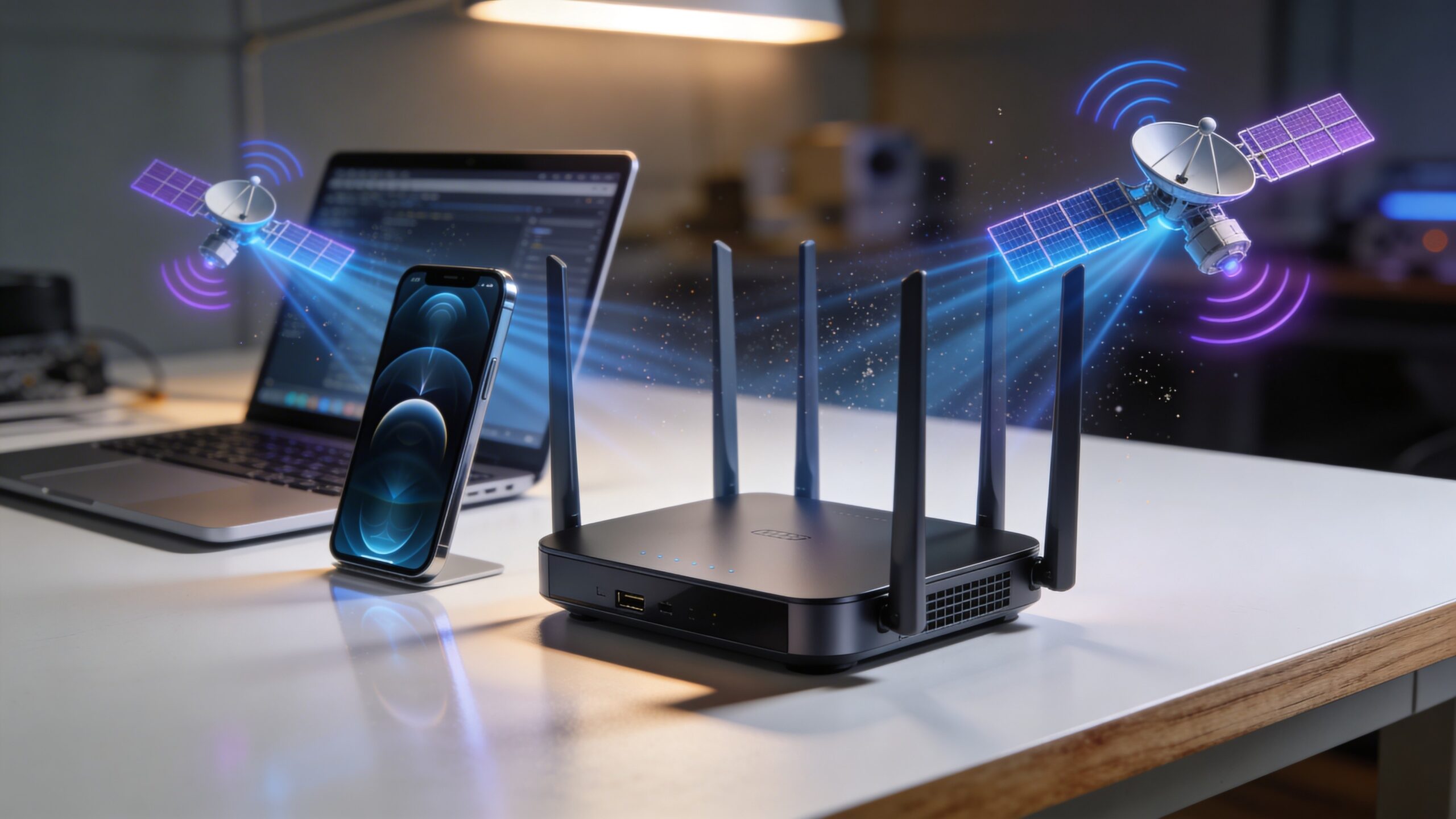
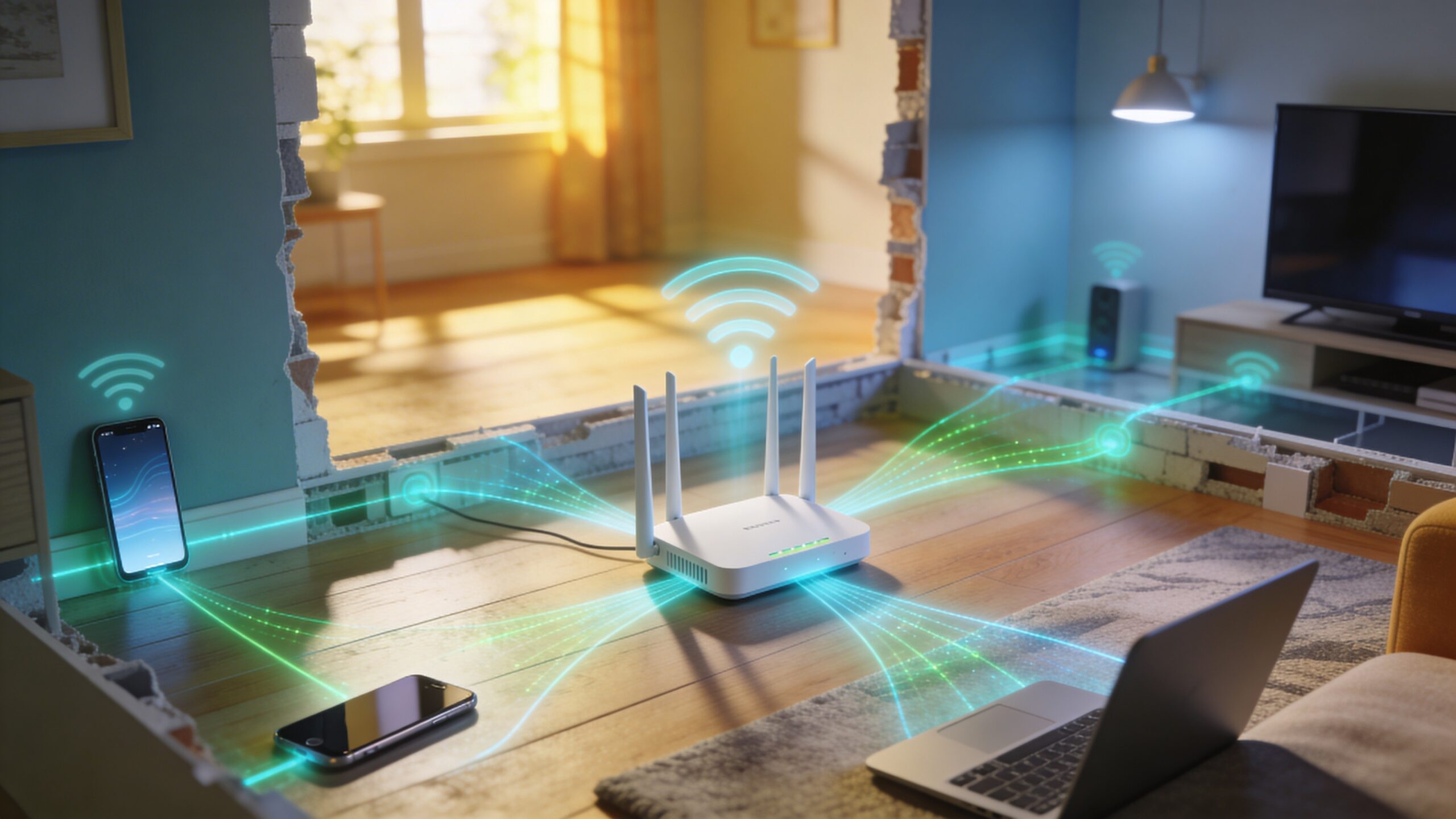
5G and 6G are often compared as if one simply replaces the other, but the difference is more gradual. 5G is today’s advanced cellular platform, built around faster data, lower latency, better capacity, network slicing, and support for connected devices. 6G is the next research frontier, expected to push networks toward deeper sensing, AI-native management, higher frequencies, tighter satellite integration, and more immersive applications. The practical question is not which label sounds newer, but what each generation can actually deliver.
5G Is Still Being Built
Many users hear about 5G as if it is already complete everywhere, but deployment is uneven. Some areas have strong mid-band coverage and fast speeds. Others rely on low-band service that improves reach more than performance. Dense urban zones may have small pockets of very high-speed millimeter wave coverage.
This uneven rollout matters because the 5G experience depends on spectrum, tower density, backhaul, device support, carrier strategy, and local demand. A phone showing a 5G icon does not guarantee the same speed or latency in every neighborhood.
Before comparing 5G with 6G, it helps to understand that 5G itself is still maturing. Networks continue to add standalone cores, better spectrum use, private network options, and improved support for industrial devices.
For consumers, this means a good 5G plan still depends on local proof. Speed tests, coverage maps, device bands, and real use in the places someone actually goes matter more than the generation name on an advertisement.
6G Is Mostly Research Today
6G is not a finished consumer network. It is a collection of research goals, standards work, lab trials, spectrum discussions, and early prototypes. Commercial deployments are generally expected later than today’s 5G expansion, not as an immediate replacement.
The ideas linked to 6G include terahertz communication, integrated sensing, AI-driven network control, high-precision positioning, satellite and terrestrial integration, and support for immersive digital experiences. Some of these ideas may arrive gradually before the final standard is widely deployed.
This makes 6G exciting but uncertain. The label points toward a direction, not a guaranteed list of features in every future plan. Readers should treat early claims as research signals rather than finished service promises.
Standards work will decide which 6G ideas become mandatory, optional, or unrealistic. Early research often explores more possibilities than the final network will deliver. That is normal, but it makes careful reading important when bold claims appear.
Speed Is Only One Difference
6G is often described as much faster than 5G, and future systems may indeed support extreme data rates under specific conditions. But speed alone is not the whole story. Network evolution also involves latency, reliability, positioning, sensing, energy use, coverage, security, and automation.
5G already improved many of these areas compared with 4G, especially where standalone architecture and strong spectrum are available. 6G aims to push the network further so it can support applications that need richer awareness of people, devices, motion, and environment.
The meaningful comparison is therefore broader than download speed. A future network may matter most when it can coordinate machines, map environments, support real-time control, and manage resources intelligently.
Speed claims also depend on ideal conditions. A lab result using specialized hardware and short-range links may not match a busy city street, rural road, office basement, or moving train. Real service has to survive ordinary complexity.
Spectrum Will Shape the Experience
Every cellular generation depends on spectrum. 5G uses low-band, mid-band, and millimeter wave spectrum, each with different tradeoffs. Low-band reaches far, mid-band balances speed and coverage, and millimeter wave can be very fast but more limited in range.
6G research looks at even higher frequency ranges, including sub-terahertz and terahertz bands. These frequencies may provide huge capacity, but they also face challenges with distance, blockage, hardware design, heat, power use, and cost.
That means future networks will likely use a mix rather than one magic band. Coverage, capacity, sensing, and specialized applications may each rely on different spectrum layers working together.
Spectrum strategy will likely remain layered. Future networks may use lower bands for reach, mid bands for general capacity, and higher bands for dense or specialized service. The network experience will come from coordination across those layers.
AI Will Manage More of the Network
Modern networks are already too complex to manage only by hand. 5G uses automation for tasks such as traffic steering, resource allocation, fault detection, and optimization. 6G is expected to make AI even more central to network control.
AI-native networking could help predict congestion, allocate spectrum, adjust antennas, detect failures, protect security, and tune service quality for different applications. This may make networks more responsive and efficient when designed well.
The risk is that automated control also needs oversight. Operators must understand when the system changes behavior, how decisions are audited, and how errors are contained. Smarter management should not mean invisible management.
AI management may also help reduce energy use. Networks consume power, and smarter control could turn resources up or down based on demand. This matters as carriers expand capacity while trying to manage cost and environmental impact.
Sensing May Become Part of the Network
One major 6G idea is integrated sensing and communication. Instead of only carrying data, network signals could help detect location, movement, objects, or environmental changes. This could support transportation, robotics, emergency response, manufacturing, and augmented reality.
Sensing through networks raises practical and privacy questions. If infrastructure can help map movement or detect presence, the system needs rules about purpose, retention, access, and consent. The technical possibility does not automatically settle the social decision.
5G already supports better positioning and device coordination than older networks, but 6G research imagines sensing as a deeper part of the network design. That shift could be powerful if handled carefully.
Sensing features could make networks more aware of their surroundings, but awareness must be governed. Location and movement data can be useful for safety or automation, yet the same ability can become intrusive if policies are weak.
Applications Will Decide Value
A new generation matters when it enables useful applications. For 5G, that includes faster mobile broadband, fixed wireless access, private industrial networks, connected vehicles, smart cities, and low-latency services where coverage is strong enough.
For 6G, proposed applications include holographic communication, digital twins, advanced robotics, immersive collaboration, precision sensing, remote operation, and massive coordination between devices. Some will become practical; others may remain niche or change form before deployment.
The value will depend on cost, coverage, devices, standards, and user need. A future feature is not useful simply because it is possible. It must solve a real problem better than existing tools.
Applications will also depend on devices. A 6G idea may require new chips, antennas, batteries, software, and service plans before ordinary users see the benefit. Infrastructure alone is not enough if the device ecosystem is not ready.
The Practical Takeaway
5G is the current platform still being expanded and improved. 6G is the next research direction, likely to bring higher capacity, deeper automation, new spectrum, tighter sensing, and more integrated network intelligence over time.
The best comparison avoids hype. 5G should be judged by the service available in a specific place today. 6G should be judged by evidence from standards, trials, hardware progress, and realistic use cases as the technology matures.
For most users, the important question remains practical: does the network improve coverage, speed, latency, reliability, cost, or the experience of the devices they actually use? Labels matter less than the connection people can depend on.
The practical takeaway is patience. 5G still has room to improve, and 6G still has to move from research to standards to equipment to coverage. The best comparison watches real capabilities as they arrive rather than assuming every promise will appear at once.
How to Read the Claim
A useful comparison starts with availability. 5G is a real service today, even if quality varies by place. 6G is a developing target, so its benefits should be discussed as possibilities supported by research, not as guarantees for current buyers.
The next comparison is infrastructure. 5G requires spectrum, towers, small cells, fiber or microwave backhaul, modern core networks, and compatible phones or devices. 6G will require all of that plus new radio hardware, updated standards, stronger automation, and likely new device categories.
Cost will influence the pace of both generations. Carriers do not upgrade everything at once. They invest where demand, spectrum rights, regulation, competition, and business cases line up. This is why network generations often overlap for many years.
Rural and urban needs may also diverge. Dense cities may benefit earlier from high-capacity small cells and experimental bands. Rural regions may care more about coverage, reliability, fixed wireless access, satellite support, and efficient use of lower or mid-band spectrum.
Businesses will look at the comparison differently from consumers. A factory, port, hospital, mine, or utility may value private networks, predictable latency, device density, security, and automation more than peak download speed. 6G research may eventually support those needs, but 5G private networks are already part of the current conversation.
Security will remain central. More connected devices, more automation, and more sensing create more surfaces to protect. Future networks will need stronger identity, encryption, monitoring, supply-chain controls, and recovery plans. A faster network that is harder to secure would not be a clean improvement.
Environmental impact is another part of the comparison. More capacity can require more equipment, but smarter control may reduce wasted energy. The real outcome will depend on hardware efficiency, network design, traffic growth, and whether new applications create value worth the added infrastructure.
For ordinary users, the best advice is to judge the service in context. A reliable 5G connection today is more valuable than a distant 6G promise. When 6G arrives, it should be judged the same way: by coverage, cost, device support, reliability, privacy, and the applications it truly improves.
The story is not 5G versus 6G as rivals. It is a long upgrade path from today’s mobile broadband toward networks that are more aware, automated, and integrated with the physical world. The useful question is how each step improves the connection people and systems depend on.
Final Takeaway
The practical difference between 5G and 6G will become clearer as standards, devices, and deployments mature. Until then, the best comparison is grounded in what each generation can actually support. 5G is the platform people can test today. 6G is the direction researchers are shaping for tomorrow.
That does not make 6G unimportant. Early research influences spectrum planning, chip design, network architecture, security expectations, and the applications companies prepare to build. The future begins long before consumers see a new icon on a phone.
Still, real value arrives only when the network improves daily use. Faster downloads, safer automation, better coverage, richer sensing, and stronger reliability all need practical deployment. A generation label is only meaningful when the connection behind it delivers.
That is the healthiest way to watch the shift: appreciate the research, but judge the service by evidence. Coverage, latency, resilience, privacy, and cost will matter more than the name of the generation.
For now, most people are better served by understanding the 5G service available where they live and work. For planners, researchers, and businesses, 6G is worth watching because today’s experiments can shape tomorrow’s infrastructure choices.
Both perspectives can be true at once. The current network still needs practical improvement, and the next network still needs careful invention. The useful conversation keeps those timelines separate.