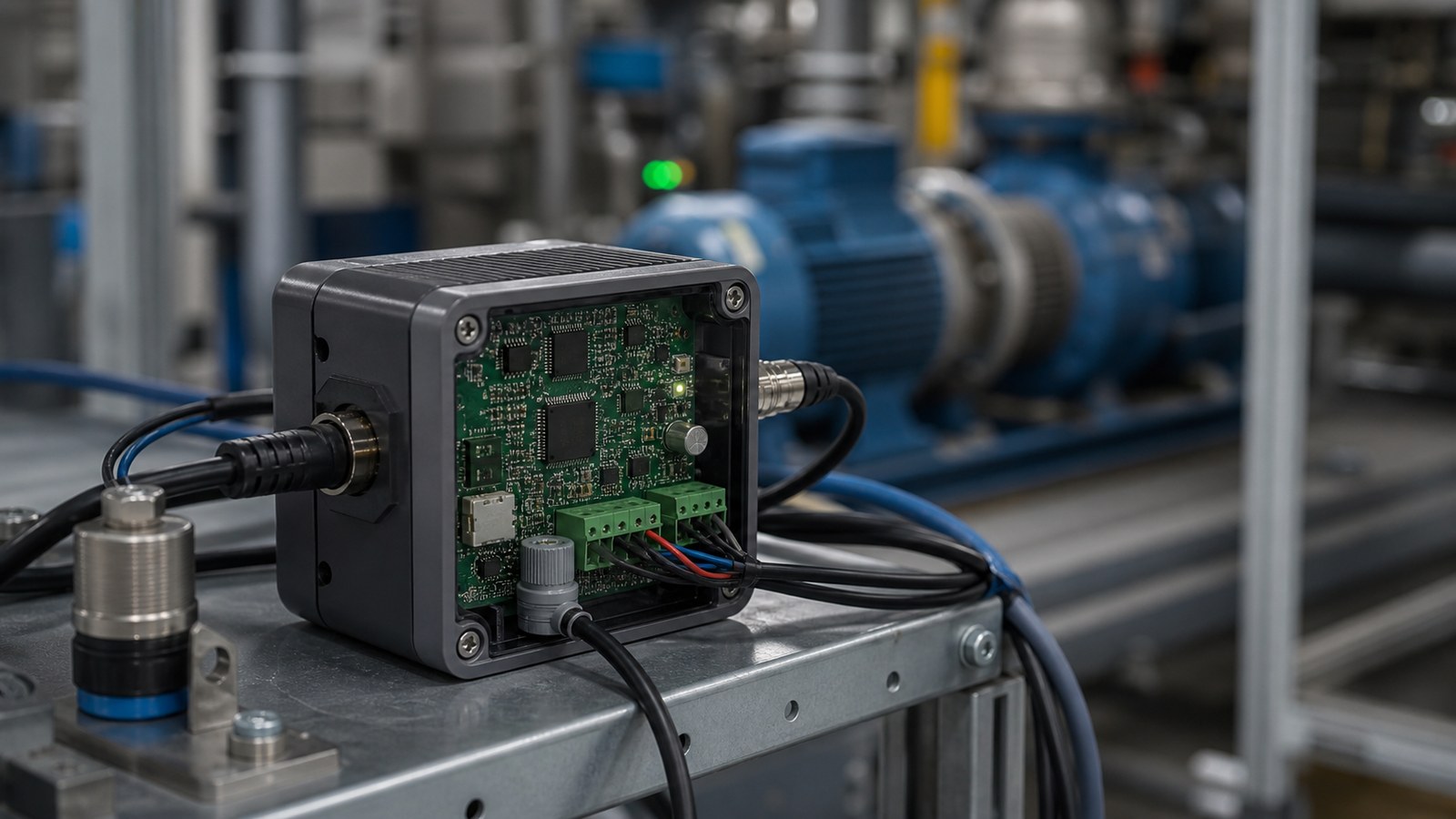
Edge AI Turns Signals Into Immediate Local Decisions
Edge AI turns wireless and electrical signals into real-time decisions by processing data close to the source. Instead of sending every reading to a distant cloud server, edge devices can detect patterns, filter noise, trigger alerts, and act locally. That matters when delay, bandwidth, privacy, or connection reliability affects the outcome. Edge AI is useful in factories, vehicles, buildings, utilities, networks, medical devices, and smart infrastructure where signals need fast interpretation before the moment passes.
Local Processing Reduces Delay
Edge AI shortens the path between signal and decision. A sensor captures data, the local device analyzes it, and the system can respond without waiting for a cloud round trip.
This is important for tasks like fault detection, safety monitoring, robotic control, power management, and wireless optimization. A delay of seconds may be acceptable for reporting but too slow for control.
Local processing does not remove the cloud. It handles the first decision where speed matters most.
Wireless Signals Change Quickly
Wireless conditions can change as devices move, users arrive, walls block paths, or interference appears. Edge AI can respond to those changes near the access point, gateway, or device.
It can help choose channels, adjust power, prioritize traffic, detect anomalies, or flag poor coverage. The goal is to keep service stable while the environment changes.
Fast local analysis is useful because wireless problems often need action before a central system sees the full picture.
Electrical Signals Reveal Equipment Stress
Electrical signals can show load, waveform shape, current draw, voltage changes, phase issues, and power quality. These readings can reveal stress before a visible failure appears.
Edge AI can monitor those patterns directly at a motor, battery, panel, inverter, or controller. It can trigger an alert, reduce load, or protect equipment when a dangerous pattern appears.
This is valuable because electrical events can move quickly. Local decision-making can reduce risk while longer-term data is sent for review.
Filtering Saves Bandwidth
Raw signal streams can be large. High-rate electrical measurements, wireless logs, and sensor data can be expensive to send continuously. Edge AI can filter the stream before it leaves the site.
The edge may send summaries, events, features, or short records around important moments. This keeps the cloud informed without flooding the network.
Filtering also helps users focus. Instead of reviewing endless raw data, they see the parts most likely to matter.
Privacy Can Stay Local
Some signal data is sensitive. A building, factory, vehicle, or medical device may generate records that should not travel widely unless necessary.
Edge AI can keep raw data local and share only the result. For example, a device may report that a condition changed without uploading every underlying signal sample.
This approach still needs security and governance. Local processing reduces exposure, but it does not replace access control, encryption, and retention rules.
Models Must Fit Edge Hardware
Edge devices have limits. They may have less memory, less compute power, smaller batteries, or harsher operating environments than cloud servers.
Models may need compression, efficient features, smaller architectures, or hardware acceleration. The goal is to run reliably within the device’s limits without producing weak decisions.
A model that performs well in the cloud is not automatically ready for the edge. It must be tested on the actual hardware and signal flow.
Cloud Still Supports Learning
Edge AI can act locally, but the cloud can still support training, fleet comparison, software updates, and long-term analysis. The two layers work well together when responsibilities are clear.
The cloud may collect selected examples from many edge devices, improve a model, and send updated versions back to the field. The edge then applies the improved model locally.
This loop helps the system learn broadly while keeping urgent decisions near the signal.
Monitoring Keeps Edge AI Honest
Edge systems need monitoring after deployment. Devices can drift, sensors can fail, models can age, and local conditions can change. Without monitoring, weak decisions may continue unnoticed.
Useful monitoring includes device health, model confidence, alert outcomes, data quality, and update status. The cloud can help track these signals across many edge devices.
A good edge system should be fast, but it should also be observable. Teams need to know whether local decisions remain trustworthy.
Final Takeaway
Edge AI turns wireless and electrical signals into real-time decisions by moving analysis close to the source. It reduces delay, saves bandwidth, supports privacy, and keeps some functions working even when connectivity is limited.
The approach is strongest when paired with cloud learning and oversight. The edge acts quickly, while the cloud stores history, compares fleets, and improves future models.
The practical goal is simple: respond to important signals while they still matter, without losing accountability or long-term learning.
What to Check Next
Before deploying edge AI, teams should test the model on the actual device, signal rate, and operating conditions. Lab performance is not enough.
They should define what data stays local, what gets summarized, and what must be sent for long-term learning. That keeps privacy, bandwidth, and model improvement in balance.
A useful review also checks the decision window. If the action does not need to happen locally, the edge model may be adding complexity without enough benefit.
The team should confirm the signal quality too. A good model cannot rescue weak sensors, poor grounding, noisy placement, or missing calibration.
Deployment Notes
Deployment should include device health checks, update plans, and rollback options. Local intelligence still needs central accountability.
Teams should decide how edge devices behave during outages, low confidence, power interruptions, and failed updates. Those cases are part of the real system, not exceptions to ignore.
Alerts should include enough context for action. A technician needs to know what changed, how urgent it is, and which evidence supports the local decision.
The cloud can collect selected examples from the field, but that collection should be intentional. Sending everything defeats much of the edge advantage.
Final Review
The final review asks whether the edge decision improves timing without hiding risk. Fast decisions are useful only when they remain trustworthy.
It should also ask whether people can inspect the outcome after the fact. Local action should leave a record that supports troubleshooting and improvement.
The best edge AI systems are modest about their role. They act quickly where speed matters, and they escalate when the evidence is weak or the consequence is high.
That balance turns signal processing into a practical operating tool rather than a black box at the edge of the network.
Practical Tradeoffs
Edge AI works best when local decisions have clear boundaries. A device may be allowed to alert, filter, slow a process, or enter a safe state, while larger changes still require central review.
Teams should decide how updates reach edge devices. A weak update process can leave models inconsistent across sites or expose devices to security risk.
They should also decide how much evidence is stored locally after an event. Keeping a short record around important moments can help later review without sending every raw signal continuously.
Field testing should include heat, dust, vibration, weak connectivity, and ordinary device wear when those conditions apply. Edge systems live closer to the real environment, so they need real environment testing.
A trustworthy edge system gives users speed without hiding accountability. Local decisions should remain visible enough for teams to inspect and improve.
Operational Review
An operational review should begin with the edge device itself. If the device is underpowered, poorly placed, overheated, or hard to update, local intelligence can become unreliable.
Signal quality should be checked regularly. Wireless and electrical readings can change because of hardware wear, interference, environment, or installation differences.
Teams should compare local decisions with later outcomes. If the edge model sends alerts that never prove useful, thresholds or features may need adjustment.
They should also review cases where the edge system stayed silent. Missed detections can reveal signal conditions that were not represented during training.
The cloud can support this review by collecting event summaries, device health reports, and selected examples from the field.
A good process avoids flooding the cloud while still sending enough evidence to improve the fleet. That balance is central to edge AI operations.
The final review asks whether local decisions remain fast, understandable, and correct enough for the role they play. If not, the model, hardware, or workflow needs adjustment.
Decision Quality
Decision quality improves when edge AI is given a clear scope. A local model may detect, filter, warn, or enter a safe state, but not every decision should be fully automated at the device.
The scope should match the consequences. A low-risk comfort adjustment can be handled differently from an electrical protection action or safety-critical machine response.
Teams should define confidence levels. A strong local signal may trigger immediate action, while a weaker signal may send a review request or wait for confirmation.
The edge system should also know when it lacks enough evidence. Missing sensor data, low confidence, or unusual conditions can be reasons to slow down or escalate.
Decision quality depends on explainability too. A local alert should include the signal change that caused it, not just a vague warning.
This helps technicians and operators respond faster. They can see whether the issue came from current, voltage, wireless quality, temperature, vibration, or another reading.
Good edge AI also keeps learning tied to results. If local decisions reduce downtime, improve service, or prevent damage, the team can prove value. If not, the system needs tuning.
The best edge systems feel immediate but not opaque. They act near the signal, preserve enough evidence for review, and support better decisions without hiding the reasoning.
Final Notes
A final edge AI review should include physical access. Devices in the field may be exposed to tampering, harsh conditions, or power interruptions that cloud models never face.
It should include update timing too. Updating an edge model during a busy shift, network outage, or critical operation can create avoidable risk.
Teams should decide how alerts are acknowledged. A local alert that no one sees or owns is not enough to protect the system.
They should also review how much local storage is needed for evidence. Too little storage can make failures hard to investigate, while too much can raise cost and privacy risk.
The review should include calibration habits. Sensors that drift slowly can make a model appear stable while its inputs become less accurate.
Installation differences matter too. Two sites may use the same model and hardware, but cable length, enclosure placement, grounding, antenna position, and nearby equipment can change the signal.
Teams should decide how exceptions are handled. If a device sees a pattern outside its training range, the safest response may be to flag uncertainty instead of forcing a confident action.
Documentation helps the field team trust the system. Technicians should know what the edge model watches, what an alert means, and which steps confirm the problem.
The cloud can help by comparing similar devices across locations. If one site behaves differently from the fleet, that difference can point to sensor trouble, environmental change, or a real equipment issue.
This comparison also keeps local decisions from becoming isolated. Edge AI may act in the moment, but its patterns should still be visible to the broader operation.
Edge AI succeeds when fast local action is paired with clear records and central oversight. That balance keeps real-time decisions useful after the first deployment.
The result is a signal system that responds quickly without becoming isolated from the people and processes responsible for it.