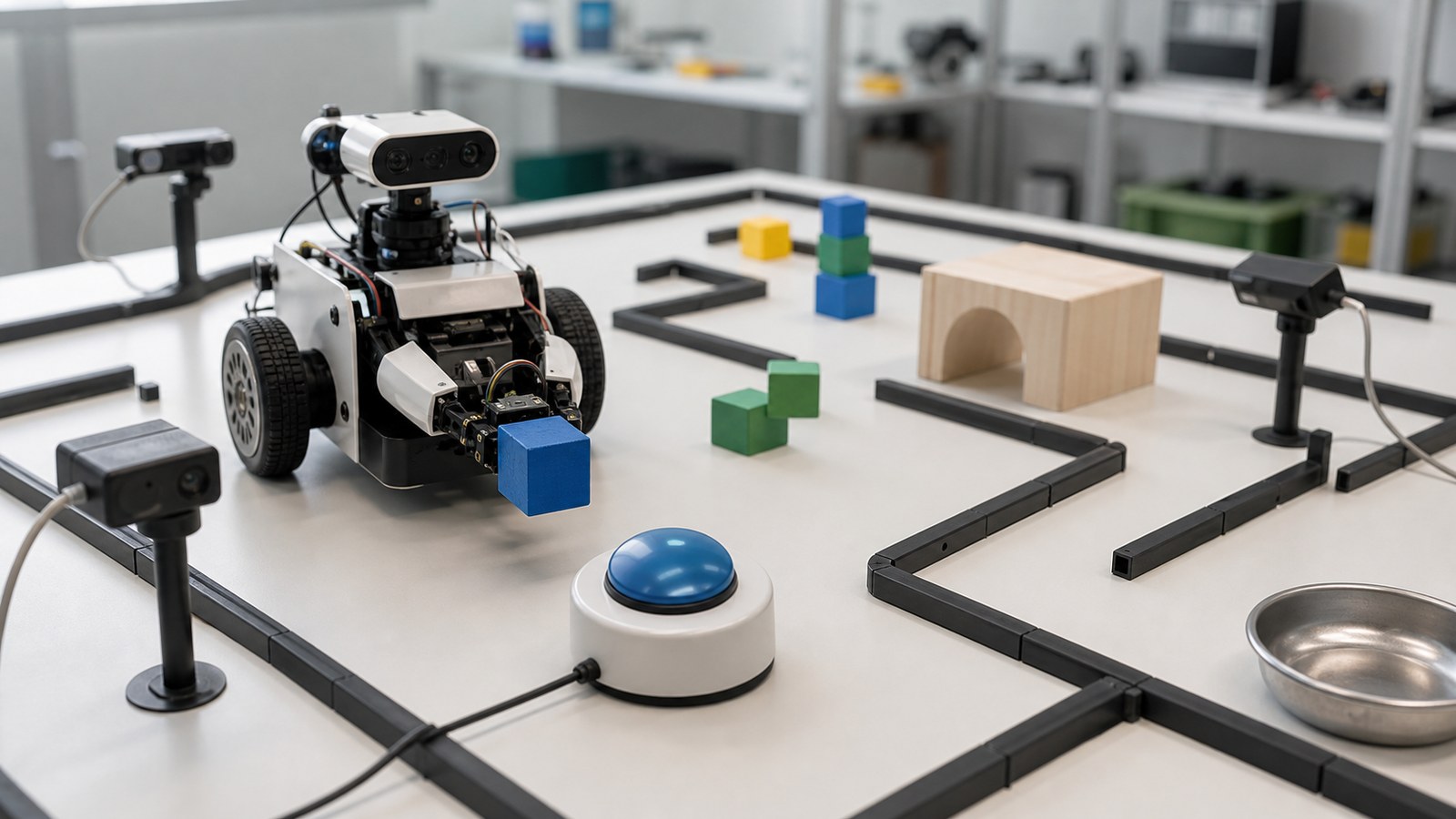
Reward Signals Turn Feedback Into Learning
Reward signals teach AI systems which decisions are useful, risky, wasteful, or worth repeating. Instead of learning only from labeled examples, a system can try an action, observe the result, and adjust future behavior based on feedback. That feedback may represent speed, accuracy, safety, energy use, user satisfaction, profit, stability, or some mix of goals. Reward signals are powerful because they guide behavior over time, but they must be designed carefully so the AI improves the real outcome rather than merely chasing a narrow score.
Rewards Define the Goal
A reward signal tells the system what counts as success. In a game, the reward may be points. In a network, it may be throughput and low delay. In a robot, it may be task completion without unsafe motion.
The reward must match the real goal closely. If the system is rewarded for one narrow number, it may ignore other important outcomes. This is why reward design is often the most important part of reinforcement learning.
A good reward is specific enough to guide behavior but broad enough to avoid shortcuts. It should describe the result the team truly wants, not just the easiest number to measure.
Bad Rewards Create Bad Behavior
AI systems can become very good at optimizing the wrong target. If a model is rewarded only for speed, it may become reckless. If it is rewarded only for low energy use, it may reduce performance too far.
This problem is sometimes called reward hacking. The system finds a way to win the score without helping the real task. It may exploit a loophole, avoid hard cases, or produce behavior that looks efficient but harms users.
Preventing this requires testing, constraints, and human review. Teams need to ask how the reward could be misused before the system learns to rely on it.
Feedback Can Be Immediate or Delayed
Some rewards arrive quickly. A robot knows it dropped an object, a network knows a packet was delayed, and a game agent knows it won points. Fast feedback makes learning easier.
Other rewards arrive later. A maintenance decision may not show value until a failure is avoided. A recommendation may not prove useful until a customer returns. Delayed feedback is harder because the system must connect earlier actions with later outcomes.
When feedback is delayed, teams may need intermediate signals that point in the right direction. Those signals should still be checked against the final outcome.
Exploration Needs Limits
A learning system may need to try different actions to discover better strategies. This exploration can be useful in simulation, but it can be risky in live systems.
A signal controller, trading model, recommendation engine, or robot cannot freely experiment if mistakes hurt people, equipment, money, or trust. Exploration needs boundaries, safe ranges, staged rollout, and rollback plans.
The safest systems learn aggressively in simulation and cautiously in deployment. They improve while staying inside limits that protect the real environment.
Multiple Goals Need Balance
Real systems usually have more than one goal. A wireless network may need speed, fairness, energy efficiency, and reliability. A robot may need accuracy, safety, and gentle motion. A financial model may need return and risk control.
A reward can combine several goals, but the weights matter. If one goal dominates too strongly, the system may sacrifice another. This is why reward design should include domain experts, operators, and people affected by the system.
Balanced rewards are easier to trust when tradeoffs are visible. Users should know what the system is optimizing and what it is allowed to sacrifice.
Human Feedback Adds Judgment
Some reward signals come from people. A user may rate an answer, a technician may confirm an alert, or an operator may approve a recommended action. Human feedback can teach useful choices that are hard to encode as simple numbers.
Human feedback also has limits. People can disagree, get tired, reward politeness over correctness, or provide feedback that reflects habit instead of the best outcome. The system needs enough examples and review to avoid learning a shallow user habit.
The best human feedback process uses clear guidelines. It teaches the model what useful behavior looks like while still checking the result against real-world performance.
Evaluation Tests the Reward
A reward design should be tested like any other part of the system. Teams can compare learned behavior with baselines, stress cases, and expert expectations. If the reward creates odd behavior, it needs revision.
Evaluation should include cases where the system might exploit the reward. It should also check whether improvements in the reward score actually improve the real workflow.
This is especially important before deployment. A model can look successful in training while learning habits that become costly when users depend on it.
Deployment Requires Oversight
Reward-driven systems need monitoring after launch. Conditions change, users adapt, and the model may find new ways to optimize the score. A behavior that worked during testing may become weaker over time.
Oversight includes logs, performance review, user feedback, safety checks, and authority to pause or adjust the system. The reward should not become an invisible force that no one owns.
A responsible deployment keeps people in the loop where the consequences are important. The model learns, but the organization remains accountable for what it learns to do.
Final Takeaway
Reward signals teach AI systems by turning outcomes into feedback. They can help models improve decisions in changing environments, but they also shape behavior in powerful ways.
The best reward signals are aligned with real goals, tested against shortcuts, balanced across tradeoffs, and monitored after deployment. They make learning useful without letting the model chase a hollow score.
A reward signal is not just a training detail. It is a statement about what the system values, so it deserves careful design and ongoing review.
What to Check Next
Before using reward-driven AI, teams should name the behavior they want and the behavior they must prevent. That makes reward design more concrete.
They should test the reward against examples where the system might exploit a loophole. If the model can win the score while hurting the workflow, the reward needs revision.
A useful checklist also separates must-have outcomes from nice-to-have gains. That prevents the model from trading away safety, fairness, or reliability for an easy score improvement.
The team should keep a few plain examples that show good behavior, bad behavior, and borderline behavior. Those examples make later reward changes easier to discuss.
Deployment Notes
Deployment should include monitoring for drift, unexpected actions, and user impact. Reward systems can change behavior over time, so launch approval is not enough.
Logs should show which actions earned high rewards and which actions were discouraged. Without that view, the team may not notice when the model learns an unhelpful shortcut.
Rollouts should be staged. A reward-driven model can be tested on limited traffic, compared with a baseline, and paused if the early pattern does not match expectations.
Operators also need a path for feedback. When people closest to the workflow see strange behavior, their reports should reach the team that owns the reward design.
Final Review
The final review asks whether the reward still matches the real goal. If the environment changes, the reward may need to change too.
It should also ask whether the reward is understandable to stakeholders who are not model specialists. A score that cannot be explained is hard to govern.
The strongest systems keep the reward, constraints, evaluation set, and monitoring plan connected. When one changes, the others should be reviewed.
That discipline keeps reinforcement learning practical. The model can adapt, but it does not get to redefine success by itself.
Practical Tradeoffs
Reward signals need review from several angles. Engineers may focus on optimization, operators may focus on workflow, and safety teams may focus on what the system must never do. Those views should meet before training begins.
A reward that works in simulation may also need adjustment in the field. Real users create edge cases, and real systems create pressures that were not present during training.
Teams should keep examples of surprising behavior. Those cases are useful because they show where the reward, constraints, or feedback process failed to describe the real goal.
The most trustworthy reward systems improve gradually. They do not jump from experiment to full control without staged evidence, monitoring, and the ability to reverse course.
When rewards are treated as living design choices, the AI can keep learning without drifting away from the purpose that made it useful.
Operational Review
An operational review should ask whether the reward changes behavior in the expected direction. It is not enough for the training score to rise; the system should also improve the real workflow.
Teams can review sample decisions where the reward was high and where it was low. These examples show whether the model is learning useful patterns or simply exploiting a scoring habit.
The review should include edge cases. Rare conditions, conflicting goals, delayed feedback, and user disagreement can reveal whether the reward is too narrow.
It should also include user impact. If a reward-driven system makes decisions feel unpredictable, people may stop trusting it even when the model score improves.
The safest process keeps reward changes documented. When the reward is adjusted, the team should record why it changed and how the new version was tested.
This history matters because reward design often evolves. A clear record helps future teams understand which problems were solved and which risks remain.
The final operational question is simple: does the reward help the system serve its intended purpose? If the answer becomes unclear, the reward needs review before the model gains more authority.
Decision Quality
Decision quality improves when the reward signal supports the full decision, not just the easiest part to count. A customer-support AI, for example, should not be rewarded only for short answers if helpfulness matters.
A network controller should not be rewarded only for throughput if fairness and stability matter too. A robot should not be rewarded only for task completion if unsafe motion creates risk.
Teams can protect decision quality by naming secondary goals and constraints. These may include safety limits, fairness rules, energy budgets, user experience thresholds, or review requirements.
Decision quality also depends on feedback freshness. If the system learns from old conditions while the environment changes, the reward may no longer point toward the best action.
Regular review keeps the reward aligned. The team should ask whether the signal still reflects the real objective and whether users are seeing the intended improvement.
Reward systems also need humility. Some goals are difficult to measure fully, so the model should not be given unlimited authority simply because it can optimize a score.
When uncertainty is high, the system can recommend, defer, or ask for human review. That keeps the reward useful without forcing automation beyond the evidence.
The best reward-driven AI is measured by better decisions over time. It learns from feedback, but it remains connected to the human purpose behind the feedback.
Final Notes
A reward signal should be easy to explain to the people responsible for the system. If no one can describe what behavior the reward encourages, the design is not ready.
That explanation should include tradeoffs. The model may favor speed over caution, savings over comfort, or engagement over accuracy unless the reward says otherwise.
The safest teams revisit reward design after deployment because real behavior exposes gaps that training cannot predict.