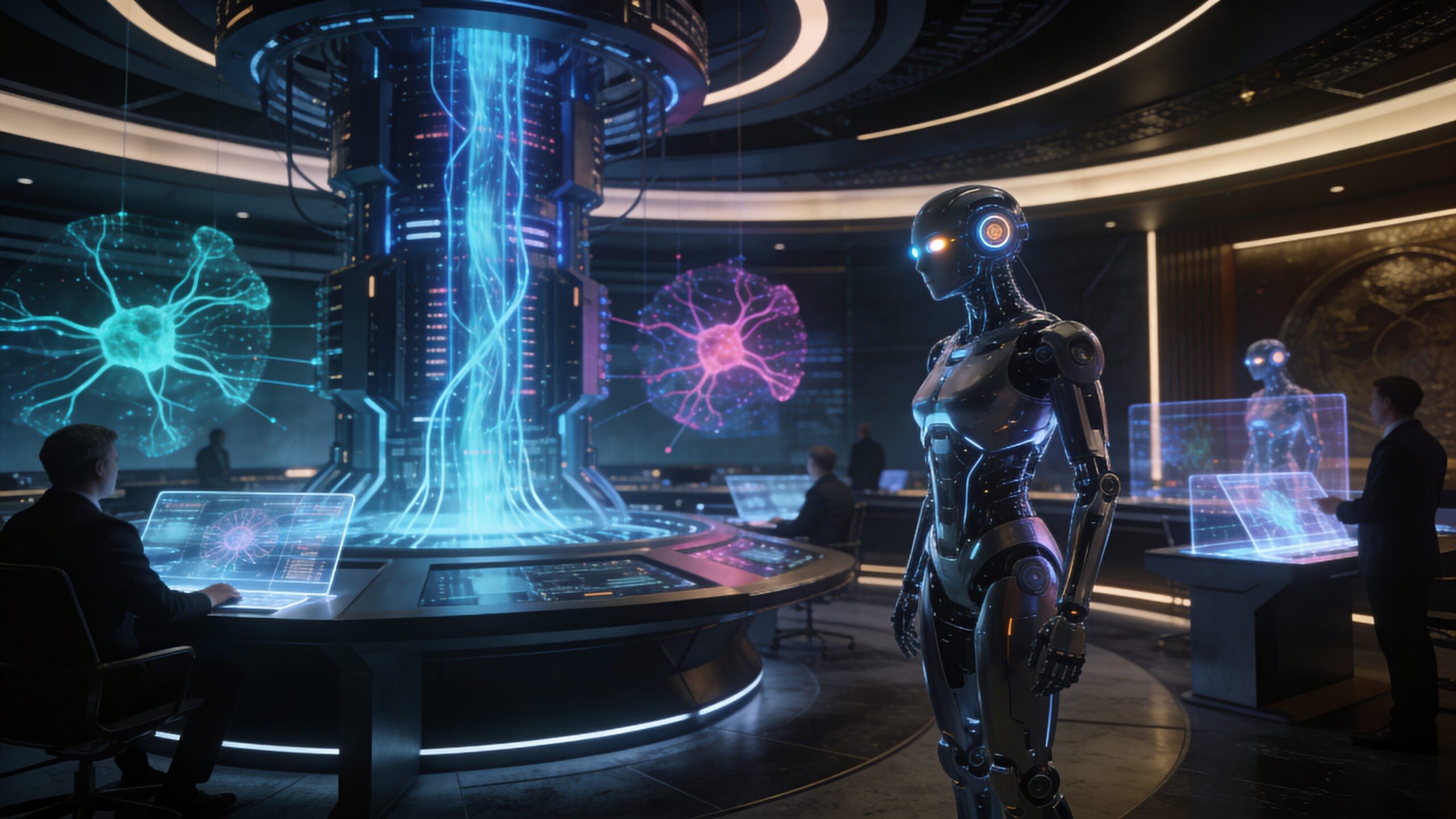
Robotics Labs Turn AI Ideas Into Physical Tests
Advanced robotics research facilities matter because they force artificial intelligence to deal with the physical world. A robot cannot rely only on words, images, or simulated examples. It has to sense objects, plan movement, control motors, recover from mistakes, and operate around people, tools, floors, shelves, doors, and changing light. The best labs combine mechanical design, perception, control systems, machine learning, safety testing, and human factors so that a clever algorithm becomes a machine that can actually perform useful work.
Robots Need Bodies and Brains
A robot is not only software with arms attached. The shape of the machine affects what it can lift, reach, see, balance, and repair. Joint design, grippers, wheels, sensors, batteries, and materials all shape the intelligence the system can express.
This is why robotics labs bring together many disciplines. A planning model may propose a perfect action, but the hardware still has to carry it out. The strongest facilities treat physical design and decision-making as one connected problem.
A small design choice can change the entire system. A gripper with the wrong surface may drop objects that the software identified correctly. A camera placed too low may miss the shelf edge. Robotics research works because it respects those physical details instead of treating the body as an afterthought.
Perception Starts the Chain
Before a robot moves, it has to understand something about its surroundings. Cameras, depth sensors, lidar, radar, touch sensors, microphones, and force sensors can all help the system build a working picture of the environment.
That picture is never perfect. Glass, shadows, clutter, glare, dust, and motion can confuse sensors. Research labs test perception under messy conditions because a robot that only works in a spotless demo space is not ready for ordinary use.
Perception also has to be fast enough to guide action. A perfect understanding that arrives too late is not useful when a person steps into a hallway or a part slips on a conveyor. Labs study both accuracy and timing because real machines need both.
Control Systems Make Motion Reliable
Control is the part of robotics that turns a plan into stable movement. It decides how fast a joint should turn, how much force a gripper should apply, and how the machine should respond when reality differs from the plan.
Good control often looks invisible because the robot simply moves smoothly. Behind that smoothness are constant corrections. The system measures what happened, compares it with what was intended, and adjusts before the mistake grows.
This constant correction is what lets robots appear calm. Without feedback, even a tiny error in position can grow into a failed grasp or an unsafe motion. Control research gives the machine a way to keep checking itself while it moves.
Learning Helps Robots Adapt
Machine learning gives robots a way to improve when hand-written rules are too brittle. A system can learn how objects behave, how people move through a room, or how different surfaces affect traction and grip.
Learning is useful, but it has to be bounded by safety. A robot exploring a simulated task can fail many times. A robot near people, fragile parts, or expensive equipment needs limits, monitoring, and recovery behavior before it tries something new.
Learning can also help a robot handle variation. Instead of programming a separate rule for every cup, box, handle, or tool, researchers train systems to recognize patterns across many examples. The hard part is making that flexibility reliable enough for the place where the robot will actually work.
Simulation Speeds Development
Robotics labs use simulation to test ideas before risking hardware. A simulated robot can repeat tasks, collect data, crash safely, and explore situations that would be slow or dangerous in the real world.
Simulation still has a gap. The real world includes friction, loose cables, worn parts, strange lighting, and objects that do not behave exactly like their digital versions. Good labs use simulation as preparation, then verify results with physical trials.
Good simulation is still extremely valuable. It helps teams test rare events, compare designs, and gather early data without breaking equipment. The key is knowing when simulation has answered enough and when the machine needs to prove itself in a physical trial.
Manipulation Is Harder Than It Looks
Picking up an object sounds simple until the robot has to handle shape, weight, texture, balance, and uncertainty. A soft bag, a shiny tool, a slippery cup, and a tangled cable each create different problems.
Research facilities study manipulation because useful robots need hands or tools that can handle variety. Success is not only whether the robot picks up one object once. It is whether it can repeat the task across many objects without constant human rescue.
Manipulation research often advances through small improvements. Better tactile sensing, softer grippers, smarter wrist motion, and improved object tracking can each make the robot more capable. The visible task may be picking something up, but the hidden work is coordination across many signals.
Mobility Adds Another Layer
A mobile robot must understand where it is, where it is going, and what can change along the way. Warehouses, sidewalks, hospitals, farms, factories, and homes all create different navigation problems.
The robot has to move efficiently without becoming reckless. It may need to slow near people, reroute around blocked paths, avoid edges, and handle surfaces that change from smooth floors to ramps or outdoor ground.
Navigation is also a social problem in shared spaces. A robot that takes the mathematically shortest path may still make people uncomfortable if it cuts too close or moves unpredictably. Strong labs test how motion feels to humans, not only how efficient it looks on a map.
Human Interaction Shapes Real Use
Robots often work near people who are busy, distracted, or unfamiliar with the machine. A useful robot should make its intent understandable through motion, lights, sounds, screens, or predictable behavior.
Human factors research matters because a technically capable robot can still fail socially. If people do not know when it will move, where it is headed, or how to stop it, the system may create stress instead of help.
Trust grows when people can predict the machine. Clear signals, stable behavior, and obvious stop options make a robot easier to work around. The best interaction design does not ask people to understand every internal system; it gives them enough cues to feel oriented.
Safety Testing Is Continuous
Safety in robotics is not a final checklist at the end. It has to be built into design, sensing, software, mechanical limits, emergency stops, maintenance, and operating procedures. Every added capability can create a new failure mode.
Research labs test what happens when sensors lose signal, motors slip, batteries weaken, networks lag, or a person steps into the path. The goal is not a perfect machine. The goal is a machine that fails in predictable and controlled ways.
Continuous safety testing also supports maintenance. A robot that works on day one may change as parts wear, sensors drift, or software updates arrive. Facilities that test over time can catch these shifts before they become serious failures.
The Best Facilities Connect Theory to Work
The most advanced robotics facilities are valuable because they close the distance between promising theory and practical use. They can test algorithms on real hardware, gather fresh data, and learn which ideas survive contact with the world.
That makes robotics a demanding but honest field. A system either grips the object, crosses the room, avoids the person, or recovers from the error. The physical test keeps the research grounded and reveals what still needs to improve.
That grounded feedback is why robotics remains one of the clearest tests of AI progress. A paper can describe a method and a video can show a highlight, but repeated operation in a real setting tells a deeper story. The machine has to perform, recover, and keep working.
Final Takeaway
Advanced robotics facilities show why intelligence is more than prediction on a screen. A capable robot has to sense, decide, move, correct itself, and stay safe while the physical world pushes back.
That makes progress slower than simple demos suggest, but also more meaningful. When a robot works repeatedly in real conditions, it proves that the design, the software, the sensors, and the safety plan are starting to fit together.
How to Read the Evidence
The best way to judge a robotics facility is to look at the gap between demonstration and repeatable operation. A highlight video can show an impressive moment, but a serious test asks whether the same system can perform again, under variation, with known limits and a recovery plan.
Repeatability matters because physical work is full of small surprises. An object may be heavier than expected, a floor may be uneven, a shelf may be crowded, or a person may interrupt the planned path. Research gains value when it prepares for those ordinary complications.
Labs also need strong measurement habits. They may track task success, time to completion, collision rates, grip failures, power use, maintenance interruptions, and human comfort. Those numbers help the team decide whether an improvement is real or just visually impressive.
Robotics research can look slower than software research because machines have to be built, repaired, calibrated, and tested safely. That slower pace is not a weakness. It is part of the discipline required when code moves motors and motors move through shared spaces.
The most useful facilities connect early experiments to specific environments. A warehouse robot, surgical tool, farm machine, home assistant, and inspection drone all face different constraints. The better the lab understands the setting, the better it can choose sensors, movement, safety rules, and training data.
Readers should be cautious when a robot is described as generally capable without details. Ask what tasks it performed, how many times it succeeded, what support it required, what environment it used, and what happened when something went wrong. Those answers reveal the real stage of progress.
Maintenance is another reality check. A robot that needs constant expert adjustment may be impressive in a lab but difficult in a hospital, factory, farm, or home. Durable robotics research pays attention to repair time, calibration, part wear, cleaning, battery cycles, and operator training.
Data collection is also harder in robotics than in many software fields. Every trial takes time, equipment, space, and safety planning. When a lab gathers high-quality physical interaction data, that dataset can become valuable far beyond one project because it captures real contact with the world.
Cost shapes adoption as much as capability. A robot may be technically strong and still fail to spread if it is too expensive, too hard to maintain, or too specialized for the buyer's routine. Practical labs study whether the benefit justifies the full ownership burden.
Field testing is where many assumptions finally meet reality. Dust, weather, vibration, clutter, network gaps, lighting shifts, and human behavior can all change performance. A facility that moves from bench trials to field trials learns which improvements matter outside a controlled room.
The long-term promise of robotics is not only replacing a task. It is extending what people can safely inspect, carry, measure, build, or repair. The best research keeps that human purpose visible, so the machine is judged by the help it provides rather than by novelty alone.
That is why the most advanced facilities are rarely focused on one breakthrough. They build a loop of design, test, failure, adjustment, and retest. Each loop teaches the team something about the machine, the environment, and the people who may one day depend on it.