Frequency, Wavelength, and Bandwidth Explain Signal Behavior
Frequency, wavelength, and bandwidth are three core ideas that make signal technology easier to understand. Frequency describes how often a wave repeats, wavelength describes the physical distance between repeating points, and bandwidth describes the range of frequencies available for carrying information. These ideas shape radio, Wi-Fi, cellular networks, fiber optics, antennas, radar, audio, and many sensor systems. Once they are clear, signal performance feels less mysterious because range, speed, interference, and capacity all become easier to connect.
Frequency Describes Repetition
Frequency tells how many cycles a wave completes in one second. It is usually measured in hertz. A low-frequency wave repeats fewer times per second, while a high-frequency wave repeats many more times. In everyday signal systems, frequency helps define where a signal lives on the electromagnetic spectrum or in an audio range.
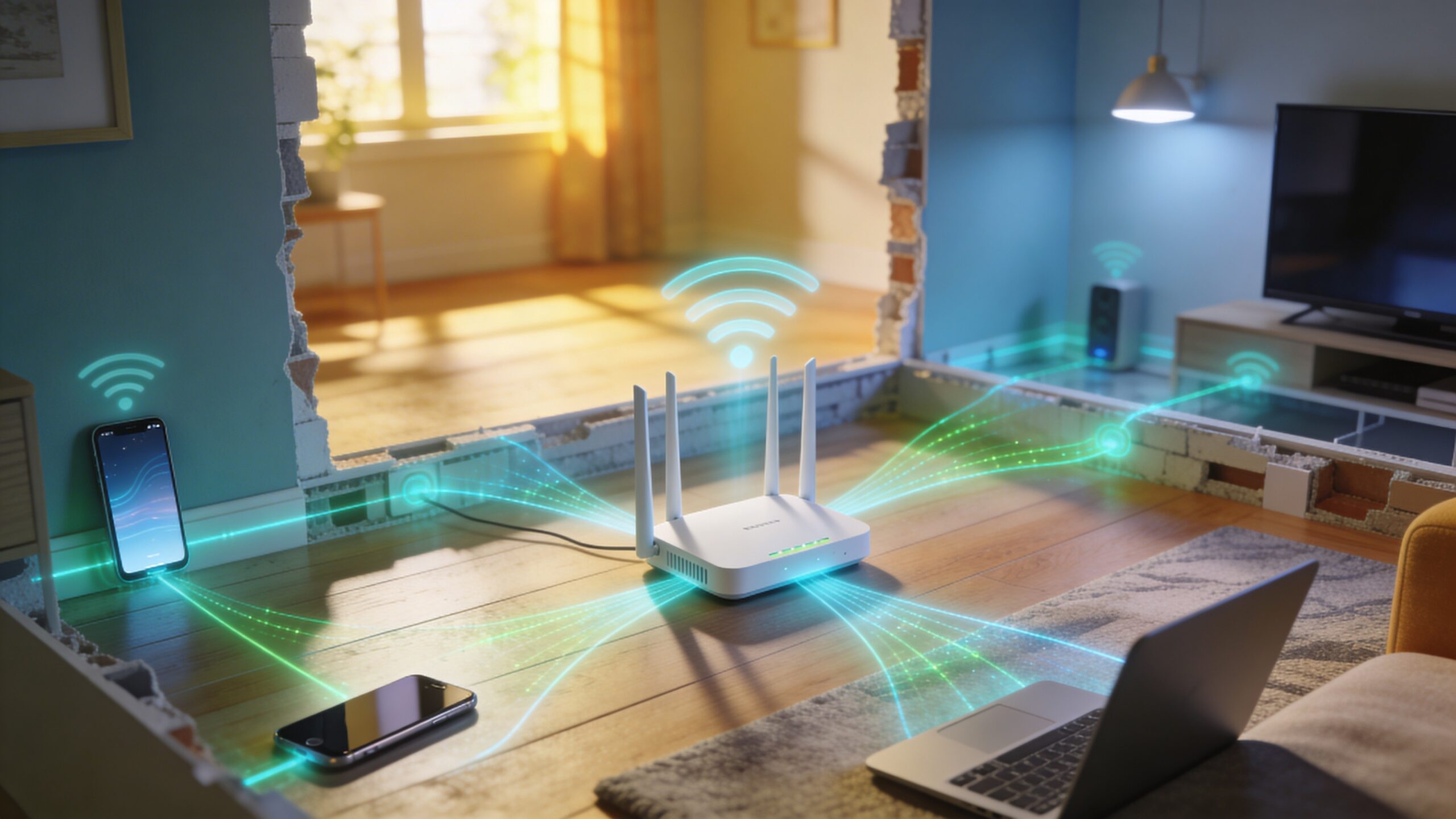
Different frequencies behave differently. Lower radio frequencies can often travel farther and bend around obstacles more easily. Higher frequencies can carry more information in some systems but may have a shorter range or be blocked more easily by walls, rain, trees, or buildings.
That is why frequency choices matter in wireless design. A rural coverage network, a short-range device link, a radar system, and a high-capacity urban cell site may all use different frequency ranges because each job balances coverage, capacity, antenna size, and interference.
Frequency also affects how devices are regulated and labeled. Radio stations, Wi-Fi routers, phones, satellites, and emergency systems all operate in assigned ranges so they can coexist. Without that coordination, useful communication would be crowded by accidental interference.
Wavelength Shows Physical Size
Wavelength is the distance from one point on a wave to the next matching point, such as crest to crest. Frequency and wavelength are connected: when frequency rises, wavelength becomes shorter. When frequency falls, wavelength becomes longer. This relationship affects how signals travel and how hardware is built.
Antenna design depends heavily on wavelength. Many antennas work best when their size relates to the wavelength they send or receive. This is one reason low-frequency systems may need larger antennas while higher-frequency devices can use smaller components.
Wavelength also affects interaction with objects. A long wavelength may pass around or through some obstacles better than a short wavelength. A short wavelength may provide useful detail for sensing or high-capacity communication but require more careful placement and line-of-sight planning.
This physical relationship is why antenna placement can change performance so dramatically. Moving a router, rotating an antenna, or placing a device away from metal and dense walls can improve how the wavelength interacts with the room. The concept may sound abstract, but it shows up in ordinary troubleshooting.
Bandwidth Is the Room for Information
Bandwidth describes how much frequency space is available for a signal or channel. A wider bandwidth can often carry more data because there is more room to encode information. This is why bandwidth is closely tied to internet speed, wireless capacity, and the number of users a system can support.
Bandwidth is not the same as frequency. Frequency tells where the signal sits; bandwidth tells how much space it occupies. A channel may be centered at a high frequency but still have narrow bandwidth, or it may use a wider slice of spectrum to carry more information.
The useful comparison is like a road. Frequency is the location of the road, while bandwidth is closer to the number of lanes. More lanes can move more traffic, but the road still has to be managed well to avoid congestion, interference, and wasted space.
Bandwidth also has practical limits. A wide channel can move more data, but it may require better signal quality and more available spectrum. In crowded environments, using the widest possible channel can sometimes create more conflict rather than better performance.
Range and Capacity Trade Off
Signal systems often balance range against capacity. Lower frequencies can provide stronger reach, which is valuable for broadcast, rural coverage, emergency communication, and wide-area networks. Higher frequencies may support higher data rates but often need denser infrastructure.
This tradeoff appears in cellular networks. Low-band spectrum helps provide broad coverage, mid-band spectrum balances coverage and speed, and high-band millimeter wave can offer very fast connections over shorter distances. None of these bands is universally best; each solves a different part of the network problem.
Good design uses the right mix. A phone, router, tower, satellite link, or sensor network may rely on several frequency ranges so the system can handle distance, speed, building penetration, and user demand together.
This tradeoff explains why network maps can be misleading if they show only one measure. A signal may reach an area but still lack capacity for many users. Another area may have high peak speed but limited indoor reach. Real performance depends on both coverage and available channel resources.
Interference Depends on Frequency Space
Signals can interfere when they overlap, reflect, scatter, or compete for the same channel. Interference may come from nearby devices, crowded networks, poor shielding, weather, building materials, or equipment problems. Understanding frequency and bandwidth helps explain where that interference begins.
A narrow channel can be easier to protect but may carry less information. A wider channel can improve capacity but may be more exposed to noise or conflict if the spectrum is crowded. Engineers use filtering, channel planning, modulation, power control, and error correction to manage these issues.
For everyday users, interference often appears as slow Wi-Fi, dropped calls, audio noise, weak Bluetooth links, or unreliable sensor readings. The cause is not always distance; sometimes the signal is simply fighting for clean space.
Interference management is especially important in shared spaces such as apartments, offices, campuses, stadiums, and industrial sites. Many devices may compete in the same bands, and small configuration choices can change the experience for everyone nearby.
Modulation Uses the Wave
Information is carried by changing a wave in controlled ways. Modulation may alter amplitude, frequency, phase, or more complex combinations. These changes allow a signal to represent voice, video, data, timing, identity, or sensor information.
Bandwidth affects how much modulation can fit into a channel. More advanced modulation can carry more bits under good conditions, but it may also require cleaner signals and stronger equipment. When conditions degrade, systems may shift to slower but more reliable modes.
This is why wireless speed can change even when the device stays connected. The system constantly negotiates what it can safely transmit based on signal strength, noise, distance, channel width, and hardware capability.
Modulation also shows why signal quality matters. Advanced encoding can pack more information into the wave, but only when the receiver can distinguish the changes clearly. As noise rises, the system may choose a simpler pattern so the connection remains usable.
Real Systems Use Compromises
No real signal system gets perfect range, perfect speed, perfect reliability, and perfect efficiency at the same time. Designers choose tradeoffs based on the job. A medical implant, a satellite link, a concert microphone, and a fiber backbone all need different priorities.
Regulation also matters. Spectrum is managed because too many uncoordinated transmitters would interfere with each other. Governments and standards groups define bands, power limits, channel widths, and permitted uses so communication systems can share space.
Hardware cost, battery life, antenna design, security, latency, and environment all shape the final choice. Frequency, wavelength, and bandwidth are core concepts, but they work inside a larger design problem.
These compromises are not failures. They are engineering choices. A battery-powered sensor may prefer low data rate and long life, while a fiber link may prioritize huge capacity. The best signal design fits the job rather than chasing one perfect number.
The Practical Takeaway
Frequency explains how fast the wave repeats, wavelength explains its physical spacing, and bandwidth explains how much room the signal has to carry information. Together, they shape how far signals travel, how much data they carry, and how easily they can be disrupted.
These ideas help make sense of common technology claims. Faster wireless service may need wider bandwidth, higher frequencies, better antennas, or denser network placement. Longer range may require lower frequencies or more careful power and antenna choices.
A clear understanding does not require advanced math. It only requires seeing the relationship between the wave, the channel, and the job the signal is supposed to perform. That foundation makes modern communication easier to read.
Once these three ideas are connected, many technology claims become easier to translate. Higher frequency, wider bandwidth, and shorter wavelength each suggest benefits and constraints. The smartest question is which tradeoff matters for the actual use case.
How to Read the Claim
A practical way to use these concepts is to connect each one to a question. If the question is range, frequency and wavelength often matter first. If the question is speed or capacity, bandwidth becomes central. If the question is reliability, interference, modulation, and signal quality need attention too.
This framework helps with everyday choices. A home Wi-Fi user may need better placement, less congestion, or a different band. A business may need access points that balance coverage and capacity. A carrier may need more spectrum, denser sites, or improved backhaul before users see better performance.
The same logic applies beyond wireless networks. Audio systems, radar units, medical sensors, fiber links, and industrial monitors all depend on how signals repeat, travel, occupy channels, and interact with noise. The vocabulary changes, but the relationships stay familiar.
Bandwidth claims deserve special care because the word is used casually. Internet providers, device makers, and software tools may use it to mean channel width, data rate, throughput, or capacity. Those ideas are related, but they are not identical. A clear explanation names which one is being discussed.
Wavelength also gives a useful reality check for futuristic claims. Very high-frequency systems can sound powerful, but shorter wavelengths may struggle with blockage and range. That does not make them bad; it means they need the right environment, hardware, and network design.
Once the tradeoffs are visible, signal design becomes less mysterious. Better performance usually comes from matching frequency, wavelength, bandwidth, power, antennas, modulation, and environment to the task instead of expecting one specification to solve everything.
Final Takeaway
The practical lesson is that signal performance is never controlled by one number alone. A fast service, a long-range link, or a clear sensor reading depends on several design choices working together. Frequency sets part of the behavior, wavelength explains physical interaction, and bandwidth helps define capacity.
When those ideas are separated, technology claims become easier to inspect. A device may use a higher frequency but still need careful placement. A network may advertise wide bandwidth but still struggle with congestion. A system may reach far but carry less data. Each tradeoff has a reason.
This is why engineers and informed buyers ask about the whole system. Spectrum, antennas, power, modulation, noise, hardware, and environment all matter. Frequency, wavelength, and bandwidth are the starting vocabulary for that larger conversation.
With that vocabulary, a person can read product claims more carefully and troubleshoot ordinary problems with more confidence. The concepts are technical, but their effects are visible in everyday connection quality.
They also make tradeoffs easier to accept. A system designed for long reach may not deliver the highest speed, and a system designed for huge capacity may need more sites, clearer paths, or better equipment. The best design is the one matched to the job.
That is why frequency, wavelength, and bandwidth belong together. Each explains part of the signal, and together they reveal why modern communication is a careful balance instead of a single specification contest.