

On Signal Streets, AI Signal Datasets are where raw waves of data turn into training fuel for smarter models. Think of this space as your backstage pass to the recordings, logs, traces, and sensor feeds that teach AI how to “hear” and “see” the world. From radar echoes and biosignals to traffic cameras, microphones, and industrial machines, every dataset is a story about patterns hiding in the noise. Here, we break down how these collections are captured, cleaned, labeled, balanced, and shared so they’re safe, fair, and actually useful. You’ll explore signal formats, sampling rates, labeling tricks, and common pitfalls without needing a PhD. We’ll talk about open datasets, synthetic data, privacy-preserving pipelines, and how to spot when your signals might be quietly lying to you. Whether you’re just dataset-curious or already tuning models, you’ll find friendly guides, real-world examples, simple visuals, and big-picture context. Step into AI Signal Datasets and learn how the right signals, in the right shape, can unlock better predictions, faster decisions, and bold new ideas you haven’t even sketched yet.
Core Signals
Data Bursts
Tech Toolshed
Hidden Frequencies
Waveform Wonders
Signal Sync FAQ’s
A: Look for open repositories, research lab releases, and challenge datasets focused on audio, sensors, or time-series.
A: Not necessarily. You can start by exploring plots, labels, and simple models, then deepen the theory over time.
A: Big enough to cover the variety of cases you care about. Quality and diversity usually matter more than sheer size.
A: Use clear folder structures, consistent naming, and a short README that explains splits, formats, and labels.
A: Yes, but watch out for different sampling rates, label styles, and recording conditions that might confuse your model.
A: Always follow local rules, remove personal details where needed, and be transparent about how data is used.
A: Refresh it when your real-world signals change or you discover new edge cases you want the model to handle.
A: Check agreement between labelers, review tricky cases, and sample random clips for quality checks.
A: Not to begin. Many signal datasets can be explored on a laptop; larger training jobs can move to the cloud later.
A: Begin with beginner-friendly guides under Core Signals, then branch into tools, hidden pitfalls, and advanced projects.
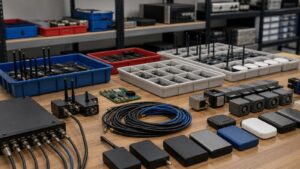
AI Signal Datasets Explained: How Machine Learning Learns From Wireless and Electrical Signals
An explainer on AI signal datasets and how machine learning learns from wireless and electrical signal examples.
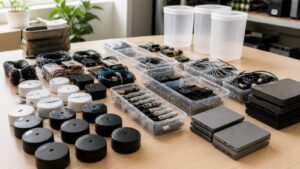
What Are AI Signal Datasets? A Beginner’s Guide for Signal Intelligence
A beginner’s guide to AI signal datasets, including examples, labels, metadata, training, testing, and signal intelligence.