

Edge AI & Signal Devices is where Signal Streets gets hands-on with the “tiny brains” living out in the real world. Instead of sending every bit of data to a distant cloud, these smart devices think on the spot—right on street corners, rooftops, factory lines, farm fields, and inside everyday gear. In this sub-category, we break down how small processors, sensors, and signal chips work together to listen, learn, and react in real time. You’ll see how cameras can spot patterns without streaming full video, how meters can flag trouble before a failure, and how wireless hubs quietly move data around like air traffic controllers. No heavy math, no lab-coat talk—just clear, friendly explanations and real-world examples. Whether you’re curious how “smart” devices really are, planning your first DIY project, or thinking about upgrading a site or system, Edge AI & Signal Devices gives you stories, ideas, and simple frameworks to spot what’s hype and what’s genuinely useful.
Core Signals
Data Bursts
Tech Toolshed
Hidden Frequencies
Waveform Wonders
Signal Sync FAQ’s
A: It just means the smart stuff happens on the device itself, not far away in the cloud.
A: It’s slower, more expensive, and can expose more data. Edge helps filter and decide first.
A: Not always. Many kits and dashboards are designed for beginners with simple setup steps.
A: Yes. Models are shrunk and tuned so they fit on tiny chips and still work well.
A: In factories, farms, smart buildings, cities, vehicles, and lots of “smart home” gear.
A: Keeping processing local can reduce what leaves the site, but good security still matters.
A: Often just one or two is enough to pilot an idea and learn what works.
A: Many edge devices keep working locally and sync their data once the link returns.
A: Low-power chips and sleep modes help batteries last months or even years in some setups.
A: Start with one clear question—like “Is this machine acting normally?”—and build from there.
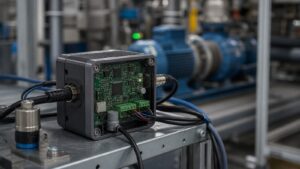
Edge AI Explained: How Smart Signal Devices Process Data Without the Cloud
An explainer on Edge AI and how smart signal devices process data locally without relying on the cloud for every decision.

What Is Edge AI? A Beginner’s Guide to Intelligent Signal Devices
A beginner’s guide to Edge AI, intelligent signal devices, local processing, latency, privacy, and sensor-based decisions.