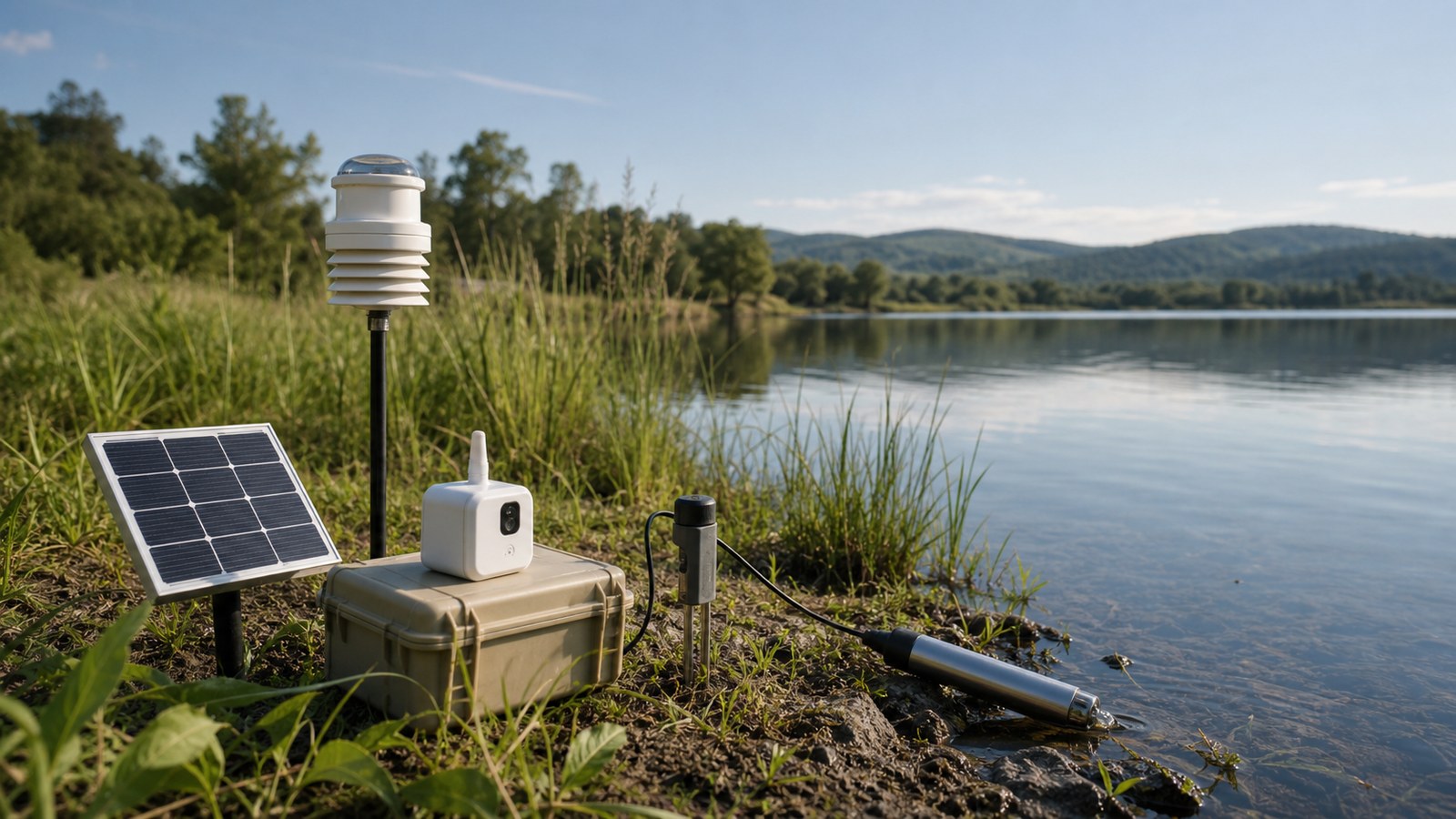
AI Reads the World Through Environmental Signals
AI reads the world through environmental signals by turning physical conditions into measurable data. A sensor network can detect heat, movement, moisture, air quality, sound, vibration, pressure, or light, then compare those readings against patterns learned over time. This can support smarter buildings, farms, factories, transportation systems, weather monitoring, and safety tools. The key is not simply collecting readings; the key is knowing which signals are reliable enough to guide a decision.
The Question Comes First
AI environmental signal analysis should start with a clear question. The team needs to know what the sensor intelligence system is trying to learn before collecting more measurements.
A clear question keeps the work focused. It also helps decide whether the real-world condition signal is strong enough to support the answer.
Signals Need Meaning
A signal is useful when it connects to a real condition, event, risk, or decision. temperature, air quality, soil, water, vibration, motion, sound, and light data can all matter, but only when they explain something relevant.
This keeps data collection from becoming clutter. The best measurement is the one that helps the system act or explain.
Measurement Quality Matters
Sensor readings can be affected by calibration, placement, age, interference, sampling rate, and physical limits.
Quality checks should happen before the model is trusted. A weak measurement can make even a strong model look unreliable.
Calibration Keeps Readings Honest
Calibration connects a measurement to a known standard or expected range. Without calibration, readings may drift away from reality.
Regular calibration protects the real-world condition signal. It helps the sensor intelligence system avoid confident decisions built on distorted data.
Time Stamps Add Context
Many signal patterns only make sense when timing is preserved. A reading before an event and a reading after an event may tell different stories.
Time stamps help reveal trends, delays, cycles, and sudden changes. They also make it easier to compare multiple inputs.
Location Can Change Meaning
The same reading may mean different things in different places. A value that is normal in one outdoor site, indoor space, industrial area, or connected infrastructure may be unusual somewhere else.
Location context prevents shallow conclusions. It helps the system compare the signal with the right baseline.
Baselines Define Normal
A baseline shows what normal conditions look like for a device, person, site, season, or operating mode.
Baselines make unusual changes easier to see. They also reduce false alarms caused by normal variation.
Noise Should Be Expected
Real-world signals include noise. Weather, motion, contact quality, device limits, power changes, and nearby equipment can all affect readings.
A useful system should not require perfect data. It should know how to handle noisy evidence and report uncertainty.
Missing Data Needs a Plan
Signals can disappear when a sensor fails, a device disconnects, or a reading is blocked.
The sensor intelligence system should have a clear response to missing data. It may wait, lower confidence, use a fallback, or request review.
Sampling Rate Shapes Detail
Sampling rate decides how often measurements are taken. Fast changes require faster sampling, while slow trends may not need constant collection.
The right rate depends on the event being measured. Oversampling can waste resources, while undersampling can miss important changes.
Resolution Affects Sensitivity
Resolution describes how finely a sensor can measure change. Low resolution may hide subtle patterns.
Higher resolution can help, but it can also increase cost, storage, and noise. The system needs enough detail for the task.
Labels Clarify the Target
Labeled examples help a model connect readings with known events or conditions. Labels may mark normal behavior, faults, states, or outcomes.
Labels should be consistent and meaningful. Poor labels teach poor signal interpretation.
Unlabeled Data Can Still Help
Some signal projects begin without clear labels. Unlabeled readings can reveal clusters, trends, outliers, and patterns worth investigating.
This can guide future labeling and collection. Exploration is useful when the team remains careful about claims.
Thresholds Need Context
Thresholds decide when a reading becomes an alert or action. A fixed threshold may not fit every device, site, or person.
Context-aware thresholds can reduce false alarms. They should still be tested against real outcomes.
False Alarms Cost Attention
A system that alerts too often can train people to ignore it. False alarms are not just statistical errors; they affect workflow.
Precision matters when attention is limited. A useful alert should be worth checking.
Missed Events Can Matter More
Some systems are built to catch rare but important events. Missing those events may carry more cost than checking extra alerts.
Recall should be evaluated with hard cases. Rare events need deliberate testing rather than average-only scoring.
Multiple Signals Can Confirm Change
Several related signals can create stronger evidence than one reading alone. Temperature, motion, vibration, and pressure may support each other.
Combined evidence should still be tested carefully. More inputs can help, but they can also introduce disagreement.
Conflicting Signals Need Review
Signals do not always agree. One reading may suggest a problem while another looks normal.
The system should know how to handle conflict. It may need confidence scores, human review, or additional testing.
Device Placement Matters
Where a sensor is placed can change what it measures. A shaded sensor, loose electrode, blocked microphone, or vibrating mount can shift results.
Placement should be documented and checked. Bad placement can look like a real pattern.
Environmental Change Can Cause Drift
Conditions change over time. Seasons, device wear, firmware updates, surface contact, building use, and user behavior can all shift signal patterns.
Drift monitoring catches those changes. It shows when recalibration or retraining may be needed.
Privacy Should Shape Design
Some signals can reveal sensitive behavior, location, health, work routines, or personal patterns.
Privacy should guide collection, storage, access, and retention. Useful signal intelligence does not require careless data handling.
Security Protects the Signal
A signal system can be damaged by spoofed readings, tampered devices, insecure updates, or unauthorized access.
Security protects the evidence the model uses. Trust depends on safe devices, data paths, and permissions.
Power and Storage Are Practical Limits
Sensors and devices may have limited battery life, memory, and storage. Continuous measurement is not always practical.
The design should match those limits. Sampling schedules, summaries, and local filtering can help.
Connectivity Cannot Be Assumed
Some systems operate with weak or intermittent network access. Data may need to be processed locally or uploaded later.
The system should define offline behavior. Delayed data can still be useful when timing and status are clear.
Cloud and Edge Can Work Together
Local devices can handle quick checks while cloud systems handle history, training, storage, or broad comparison.
The right split depends on latency, privacy, bandwidth, and maintenance. Hybrid systems are often practical.
Metrics Should Match the Task
Accuracy, recall, precision, latency, uptime, drift, calibration error, and false alarm rate can all matter.
The metric set should match the decision. A monitoring tool and a control system should not be judged the same way.
Segment Testing Finds Weak Spots
Overall performance can hide weak areas. The model may work well in one site, device type, group, or condition and poorly in another.
Segment testing reveals those gaps. It helps teams improve coverage and avoid overconfidence.
Stress Testing Shows Limits
Stress tests use difficult conditions such as noise, missing readings, unusual events, and device variation.
These tests reveal how the sensor intelligence system behaves under pressure. They help set fallback rules before deployment.
Human Review Still Matters
Some signal outputs should be reviewed by people, especially when confidence is low or consequences are meaningful.
Review should be planned, not improvised. Clear rules make the system safer and easier to operate.
Explainability Supports Use
People need enough explanation to understand why the system responded. The explanation may name the strongest signal, trend, or threshold.
This makes outputs easier to act on. It also helps catch cases where the model is reacting to the wrong clue.
Logs Make Problems Traceable
Logs should preserve key readings, timing, confidence, errors, and version details without collecting unnecessary sensitive data.
Traceable logs help teams find whether a problem came from measurement, labeling, modeling, or operations.
Updates Need Version Control
Model updates, sensor changes, label revisions, and threshold adjustments can all change behavior.
Version control makes those changes visible. It also supports rollback when a new version performs worse.
Documentation Keeps Teams Aligned
Documentation should explain inputs, units, placement, labels, metrics, limits, privacy rules, and maintenance steps.
Good documentation prevents repeated mistakes. It helps the next team understand how the sensor intelligence system works.
Deployment Should Match Reality
A system tested only in easy conditions may struggle in the actual outdoor site, indoor space, industrial area, or connected infrastructure.
Deployment tests should include real noise, real users, real placement, and real operating limits. That is where readiness becomes clear.
Operational Fit Is the Final Test
The system should improve a workflow, warning, diagnosis, forecast, control action, or investigation.
If the output does not support a real next step, the design needs more work. Practical value is the point of AI environmental signal analysis.
Final Takeaway
AI environmental signal analysis works best when measurement quality, context, privacy, testing, and maintenance are treated as part of the same system.
The strongest signal intelligence does not simply collect readings. It turns trustworthy measurements into decisions people can understand and check.
Data Retention Needs Rules
Teams should decide which raw readings, summaries, alerts, and logs are kept and which are discarded.
Retention rules reduce clutter and risk. They also preserve the evidence needed for later review.
Data Summaries Can Help
A system may not need to keep every raw measurement forever. Summaries can show trends, events, and ranges while reducing storage.
Summaries should be designed carefully. If they remove too much detail, later troubleshooting becomes harder.
User Feedback Adds Reality
People who use the system can notice patterns that dashboards miss. Feedback can reveal annoying alerts, confusing outputs, or missed events.
That feedback should be captured in a structured way. It can guide better thresholds, labels, and collection plans.
Field Checks Validate Assumptions
A field check compares the model's output with what is actually happening in the real setting.
These checks catch bad placement, broken sensors, changed conditions, and misunderstood labels. They keep the system grounded.
Anomaly Review Needs Discipline
An unusual reading is not automatically a problem. It may be a real event, a sensor issue, or a normal condition in a new context.
A disciplined anomaly review asks what changed, what else confirms it, and what action is justified.
Trend Review Shows Slow Change
Some important patterns develop slowly. Gradual drift, wear, seasonal shifts, or behavior changes may not trigger sudden alerts.
Trend review helps catch those changes. It complements real-time monitoring by showing movement over days, weeks, or months.
Model Confidence Should Be Honest
Confidence should fall when readings are noisy, missing, poorly calibrated, or outside the trained range.
Honest confidence helps users make better decisions. It shows when the system is strong and when caution is needed.
Handovers Need Plain Language
A signal system should be explainable to the people who operate it. They need to know what the readings mean and what steps follow an alert.
Plain-language handovers reduce mistakes. They make the system easier to maintain after the original build team moves on.
Governance Prevents Quiet Drift
Governance defines who can change sensors, labels, thresholds, models, and access rules.
Those controls prevent accidental drift. They also make important changes easier to trace.
Long-Term Monitoring Protects Value
A system that works at launch can weaken as devices, users, environments, and goals change.
Long-term monitoring protects the value of AI environmental signal analysis. It keeps the system aligned with the real conditions it was built to understand.