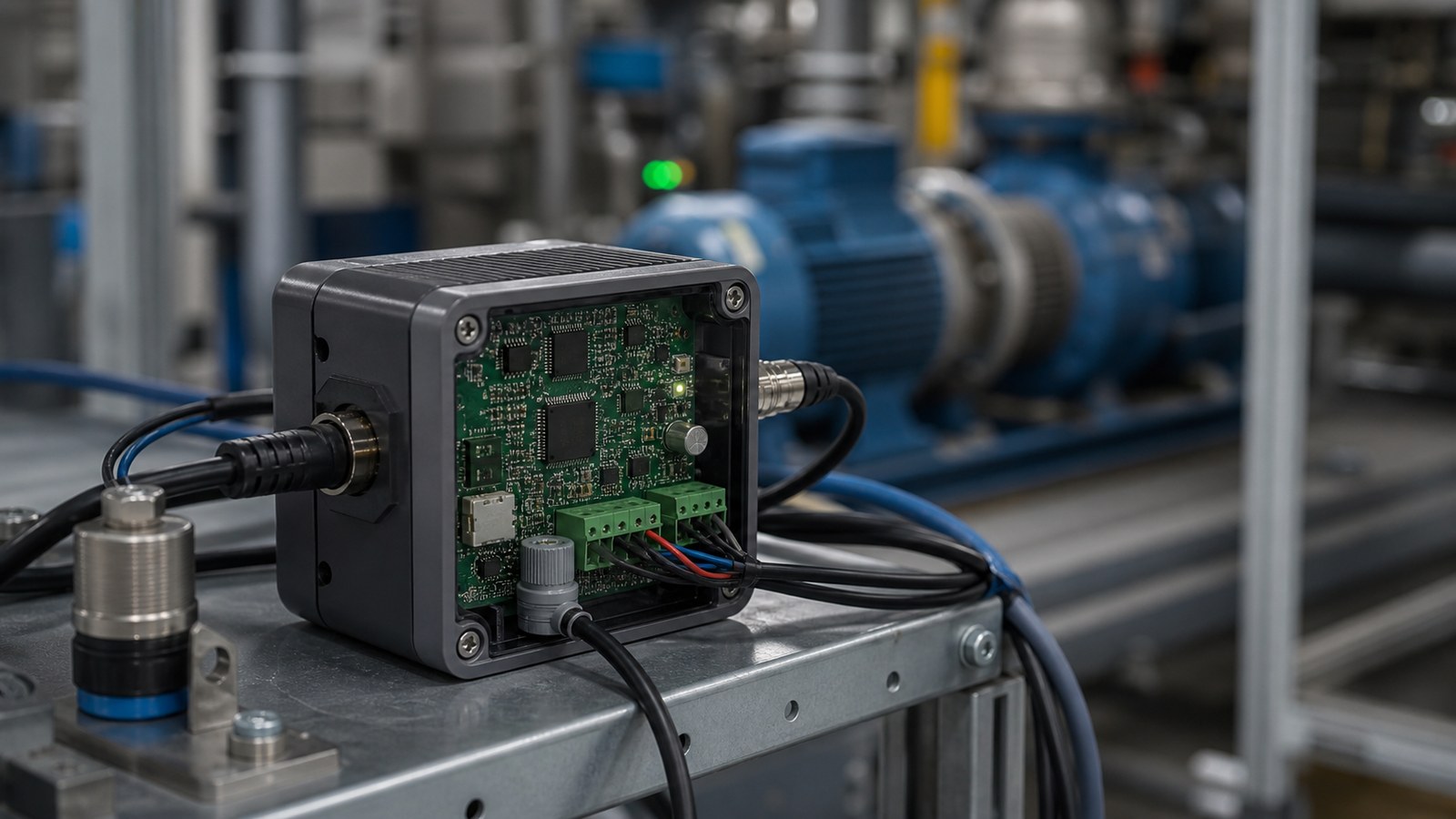
Edge AI Processes Signals Close to the Device
Edge AI means artificial intelligence runs close to where signals are captured instead of sending every measurement to a distant cloud system. A smart camera, wearable, factory monitor, vehicle component, router, or field sensor can process data locally and respond faster. The benefit is not only speed. Edge AI can reduce bandwidth use, support privacy, keep systems working during weak connectivity, and turn raw signal streams into useful local decisions.
The Goal Comes Before the Model
Edge AI should begin with a clear goal. The team needs to know what the intelligent edge device is supposed to improve before choosing data, model size, or deployment method.
A clear goal keeps the work practical. It also helps decide whether the local signal stream is strong enough to support the decision.
Signals Need a Defined Job
Each input should have a reason to exist. camera frames, audio, vibration, temperature, radio readings, and device logs can all be useful, but only when they help the system understand the task.
Collecting more data does not automatically improve the result. Useful signal design starts with relevance.
Feedback Shapes Behavior
A system learns or responds according to the feedback it receives. If the feedback rewards the wrong behavior, the output can drift away from the real goal.
Feedback should be checked against actual outcomes. The measured win should match the practical win.
Context Changes Meaning
The same signal can mean different things in different settings. A pattern that is normal in one device, room, route, or operating mode may be unusual in another.
Context helps the intelligent edge device avoid shallow decisions. Time, location, device type, load, and environment can all matter.
Latency Can Decide Value
Some signal tasks need fast response. If a result arrives too late, accuracy may not be enough to make it useful.
Latency should be measured across the full path, not just the model. Collection, processing, transfer, and action all add delay.
Bandwidth Is Part of the Design
Moving raw signal data can be expensive or slow. Local filtering, compression, event detection, or summary output can reduce the load.
Bandwidth planning keeps the system realistic. It also helps teams decide which data should stay local and which should move elsewhere.
Privacy Should Shape Collection
Signal systems may capture sensitive behavior, location, voice, health, work patterns, or device activity.
Privacy should be planned before launch. The system should collect what it needs and protect what it stores or sends.
Security Protects Trust
A signal system can be damaged by spoofed inputs, poisoned data, unauthorized updates, or insecure connections.
Security protects the evidence the model depends on. Trust requires safe data handling, access control, and update paths.
Hardware Limits Matter
A model that works on a workstation may not fit a small device. Compute, memory, power, heat, and storage can all limit design choices.
Hardware limits should be measured early. They shape model size, sampling rate, and update strategy.
Signal Quality Should Be Visible
Noise, drift, missing samples, and weak sensors can reduce confidence. The system should expose signal quality when possible.
Quality indicators help people interpret the output. They show when a decision is well supported and when review is needed.
Missing Data Needs a Plan
Real systems lose inputs. A device may disconnect, a sensor may fail, or a reading may arrive late.
The intelligent edge device should have a clear behavior for missing data. It may wait, fall back, reduce confidence, or ask for review.
Thresholds Turn Scores Into Actions
Many systems produce scores before triggering an alert, decision, or adjustment. Thresholds decide when the score becomes action.
Thresholds should reflect the cost of mistakes. A missed event and a false alarm may not have equal impact.
False Alarms Create Fatigue
Too many false alarms can cause people to ignore the system. This is a practical failure even if the model finds many real events.
Precision matters when attention is limited. A useful alert should be worth checking.
Missed Events Carry Risk
A system can also fail by missing important events. This matters when the goal is safety, maintenance, security, or fast response.
Recall should be tested with hard cases. Rare but important situations deserve special attention.
Training Data Needs Coverage
Training examples should cover the conditions the system will face. Easy examples alone do not prove readiness.
Coverage should include ordinary operation, weak signals, edge cases, and realistic noise. That range helps the model generalize.
Testing Should Match Deployment
A clean test environment can make a system look stronger than it is. Real deployment adds noise, timing pressure, user behavior, and device variation.
Testing should include conditions close to real use. That is where fragile designs become visible.
Baselines Keep Claims Honest
A baseline shows whether the new system improves on a simple rule, older model, or cloud-only approach.
Without a baseline, improvement is hard to judge. A complex design should earn its extra cost.
Metrics Need Balance
Accuracy, recall, precision, latency, uptime, power use, bandwidth, and cost may all matter.
The right metric mix depends on the goal. A system built to make useful decisions near the source should be judged by more than one score.
Model Size Is a Tradeoff
Larger models may improve pattern recognition, but they can be slower, costlier, and harder to run on small hardware.
Model size should match the job. A smaller model can be better if it is fast, stable, and accurate enough.
Updates Need Control
Deployed systems need updates for models, firmware, thresholds, and security fixes. Updates can improve performance or introduce regressions.
Version control and rollback plans make updates safer. A new version should be tested before broad release.
Monitoring Continues After Launch
Signal environments change. Devices age, software changes, users adapt, and operating conditions shift.
Monitoring catches drift and failure. It shows when the intelligent edge device needs recalibration, retraining, or repair.
Human Review Still Helps
Some outputs should be reviewed by people, especially when confidence is low or consequences are meaningful.
Review rules should be defined in advance. They keep the system useful without pretending it can solve every case alone.
Explainability Supports Trust
People may need to know why a system responded. A clear explanation can show which signal, threshold, or condition influenced the result.
Explanation does not have to reveal every internal detail. It should be clear enough to support review and action.
Fallback Behavior Protects Workflows
If the system is uncertain, offline, or missing key inputs, it should have a fallback path.
Fallbacks may include a safe state, local rule, manual review, delayed processing, or cloud support. The path should be intentional.
Local Decisions Need Boundaries
A local or autonomous system should know what it can decide and what should be escalated.
Boundaries prevent overreach. They keep the intelligent edge device focused on the decisions it is prepared to support.
Logs Help Diagnose Problems
Logs should record important inputs, outputs, confidence, timing, errors, and version details without collecting unnecessary sensitive data.
Good logs make troubleshooting possible. They help teams understand whether a failure came from data, model behavior, hardware, or operations.
Power Use Can Limit Runtime
Battery-powered and embedded systems must manage energy carefully. Sampling, processing, wireless transfer, and storage all consume power.
Power planning keeps the system usable. A smart device that drains too quickly may not be practical.
Connectivity Cannot Be Assumed
Some systems operate where network access is weak, expensive, intermittent, or unavailable.
The design should define what happens offline. Local processing can help, but synchronization and updates still need planning.
Edge and Cloud Can Work Together
Local processing and cloud processing are not enemies. Many systems use local decisions for speed and cloud systems for storage, training, or broader analysis.
The best split depends on latency, privacy, bandwidth, cost, and maintenance. Hybrid design is often practical.
Data Retention Should Be Intentional
Teams should decide what raw data, summaries, alerts, and logs are kept and for how long.
Retention rules reduce clutter and privacy risk. They also make future analysis easier when the right evidence is preserved.
Failure Cases Teach the Most
Errors reveal what the system does not understand. Studying failures can expose weak labels, missing data, bad thresholds, or poor assumptions.
Failure review should feed the next update. It turns mistakes into useful maintenance work.
Operational Fit Is the Final Test
A system succeeds when it fits the workflow around it. The output should arrive in time, be understandable, and support a real next step.
That operational fit matters as much as model score. The strongest design helps people act with better evidence.
Good Design Avoids Overconfidence
A signal system should not make weak evidence look stronger than it is. Confidence, limits, and uncertainty should remain visible.
This keeps users from treating the output as automatic truth. Careful uncertainty makes the system safer to use.
Documentation Makes Handoffs Easier
Documentation should explain inputs, limits, metrics, update rules, fallback behavior, and known risks.
Good documentation helps future teams maintain the intelligent edge device. It also keeps the design understandable after launch.
Final Practical Takeaway
Edge AI works best when the signals, feedback, hardware, metrics, and workflow all support the same goal.
The point is not to make AI sound bigger. The point is to make useful decisions near the source with evidence that can be tested and maintained.
Calibration Keeps Readings Honest
Calibration makes sure measurements mean what the system thinks they mean. A sensor, model score, or feedback value can drift away from reality over time.
Regular calibration protects the local signal stream. It helps the intelligent edge device avoid confident decisions based on stale or distorted evidence.
Rollouts Should Be Staged
A staged rollout lets teams test behavior with limited risk before expanding use. It can start with observation, then alerts, then controlled action.
Staging helps the engineering team catch issues early. It also gives people time to understand the system before relying on it heavily.
Stress Testing Finds Limits
Stress tests show what happens when inputs are noisy, delayed, missing, crowded, or contradictory.
These tests reveal where the intelligent edge device becomes uncertain. They also help set safe fallback behavior before real users depend on it.
Alert Priority Should Be Clear
Not every output needs the same response. Some events need immediate action, while others only need logging or periodic review.
Priority rules keep the workflow manageable. They prevent small issues from drowning out important signals.
Data Summaries Can Reduce Load
A system may not need to save or transmit every raw sample. Summaries, features, and event records can reduce storage and bandwidth.
Summaries should preserve the evidence needed for review. If they remove too much detail, troubleshooting becomes harder.
Local Storage Needs Limits
Devices that process signals locally may have limited storage. Logs, samples, model files, and updates can compete for space.
Storage limits should be planned. The system should know what to keep, compress, upload, or delete.
User Feedback Should Be Structured
User feedback is most useful when it is captured in a consistent way. Free-form comments help, but structured outcomes are easier to learn from.
Structured feedback can improve thresholds, labels, and update plans. It gives the engineering team a clearer maintenance loop.
Governance Helps With Risk
Governance defines who can change models, thresholds, data rules, and update schedules.
Clear governance prevents accidental drift. It also helps teams explain why the intelligent edge device behaves the way it does.
The System Should Be Auditable
An auditable system keeps enough records to explain important outputs after the fact.
Auditability supports trust and troubleshooting. It shows which version, data, threshold, and signal quality shaped a decision.
Long-Term Value Comes From Maintenance
The first launch proves that the design can work. Long-term value comes from keeping it aligned with changing devices, signals, and goals.
Maintenance is not extra polish. It is the work that keeps Edge AI useful after the first successful deployment.