Bio-Signals Turn Body Activity Into Measurable Patterns
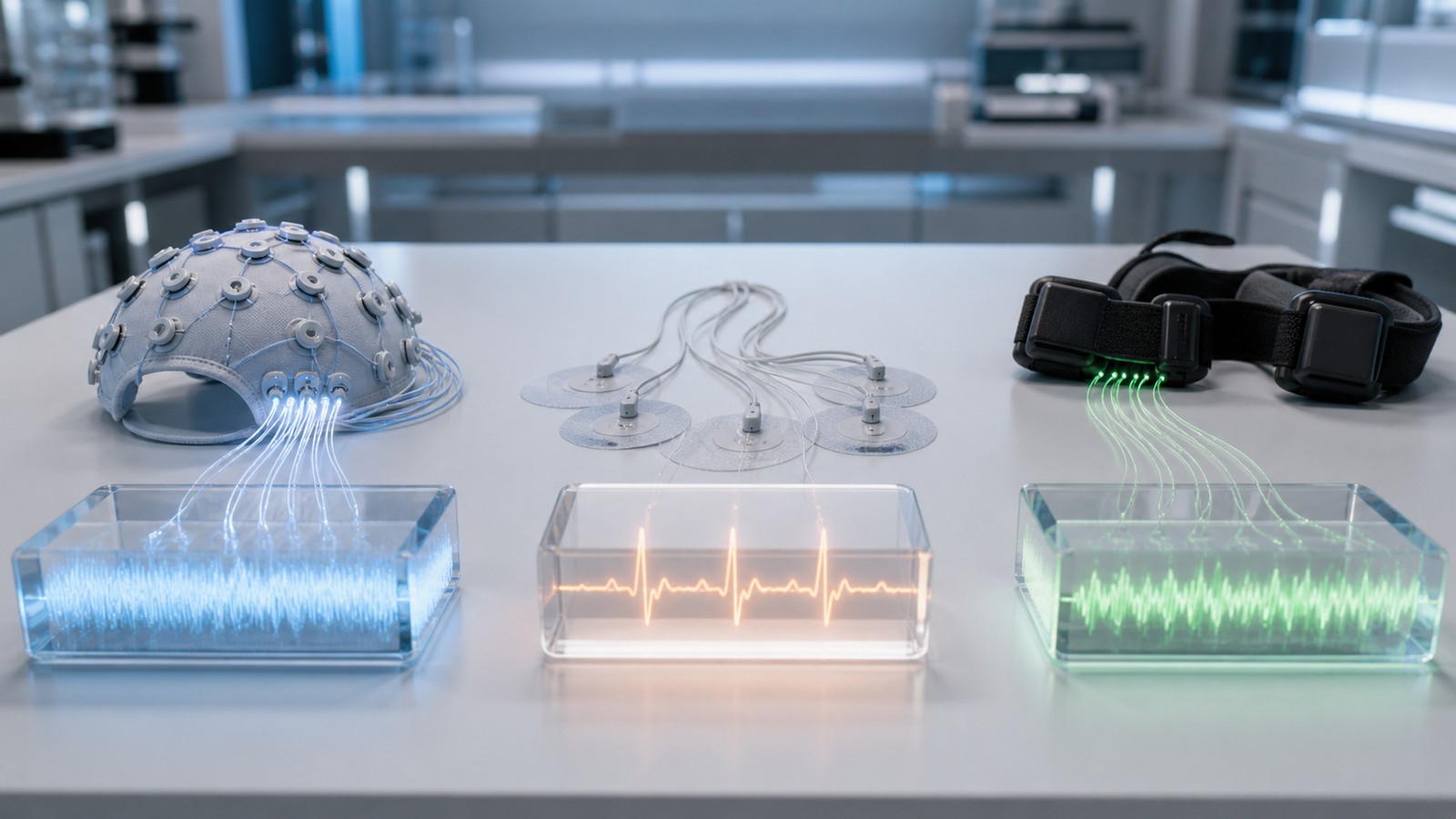
EEG, ECG, and EMG are core bio-signals because they capture electrical activity from the brain, heart, and muscles. AI systems can analyze these signals to support monitoring, research, rehabilitation, device control, and early warning workflows, but the signals must be collected and interpreted carefully. A strong bio-signal system does not treat every waveform as a diagnosis. It checks signal quality, context, timing, and clinical or operational purpose before turning patterns into useful insight.
EEG Tracks Brain Activity
EEG records electrical patterns from the scalp and gives AI a way to study brain-state changes over time. It can support sleep research, seizure monitoring, attention studies, neurofeedback, and brain-computer interface experiments when electrodes, sampling, and labeling are handled carefully.
EEG is sensitive to movement, blinking, muscle tension, poor contact, and environmental noise. AI can help sort patterns, but it needs clean data and cautious interpretation because scalp signals are indirect evidence of complex brain activity.
ECG Measures Heart Rhythm
ECG records the electrical timing of the heart and is widely used because rhythm patterns carry practical medical information. AI can help flag irregular beats, rate changes, conduction patterns, and episodes that deserve professional review.
The system still needs context. Exercise, stress, medication, sensor placement, and device quality can all change readings. A model should support clinicians and users by highlighting evidence, not by pretending a signal alone explains the whole person.
EMG Shows Muscle Activation
EMG measures electrical activity from muscles and helps AI understand movement, fatigue, rehabilitation progress, prosthetic control, and motor intent. The signal can show when muscles activate, how strongly they fire, and how patterns change across repeated tasks.
Muscle signals vary by electrode location, skin condition, posture, effort, and nearby muscle activity. AI models need examples from the real task, not only clean lab contractions, if the output is going to be trusted in practical settings.
Signal Quality Comes First
Bio-signal analysis starts with measurement quality. Loose electrodes, motion artifacts, low battery power, poor contact, and bad placement can all create patterns that look meaningful but are really measurement problems.
A good system checks impedance, missing data, noise level, channel consistency, and sudden jumps before interpreting the waveform. This protects users from confident outputs based on weak evidence.
Timing Changes the Meaning
Timing matters because bio-signals are dynamic. A heart rhythm, muscle activation, or brain-wave pattern may be meaningful only when connected to a specific activity, symptom, rest period, or stimulus.
AI systems should preserve enough timing detail to connect the signal with the event being studied. If timing is blurred, the model may find patterns that are mathematically neat but clinically or practically weak.
Features Help Models Learn
AI often uses features such as frequency content, amplitude, intervals, variability, waveform shape, event timing, and channel relationships. These features turn raw bio-signals into structured evidence that a model can compare.
Feature design should match the body system and use case. ECG intervals, EEG bands, and EMG activation bursts describe different physical processes, so the model should not treat them as interchangeable data streams.
Labels Need Care
Labeled examples teach AI what a signal pattern means, but labels can be difficult in bio-signal work. A sleep stage, arrhythmia event, movement, seizure marker, or fatigue state may require expert review and careful timing.
Weak labels create weak learning. If the label is too broad, late, inconsistent, or disconnected from the signal window, the model may learn shortcuts instead of the pattern users actually need.
Wearables Add Convenience
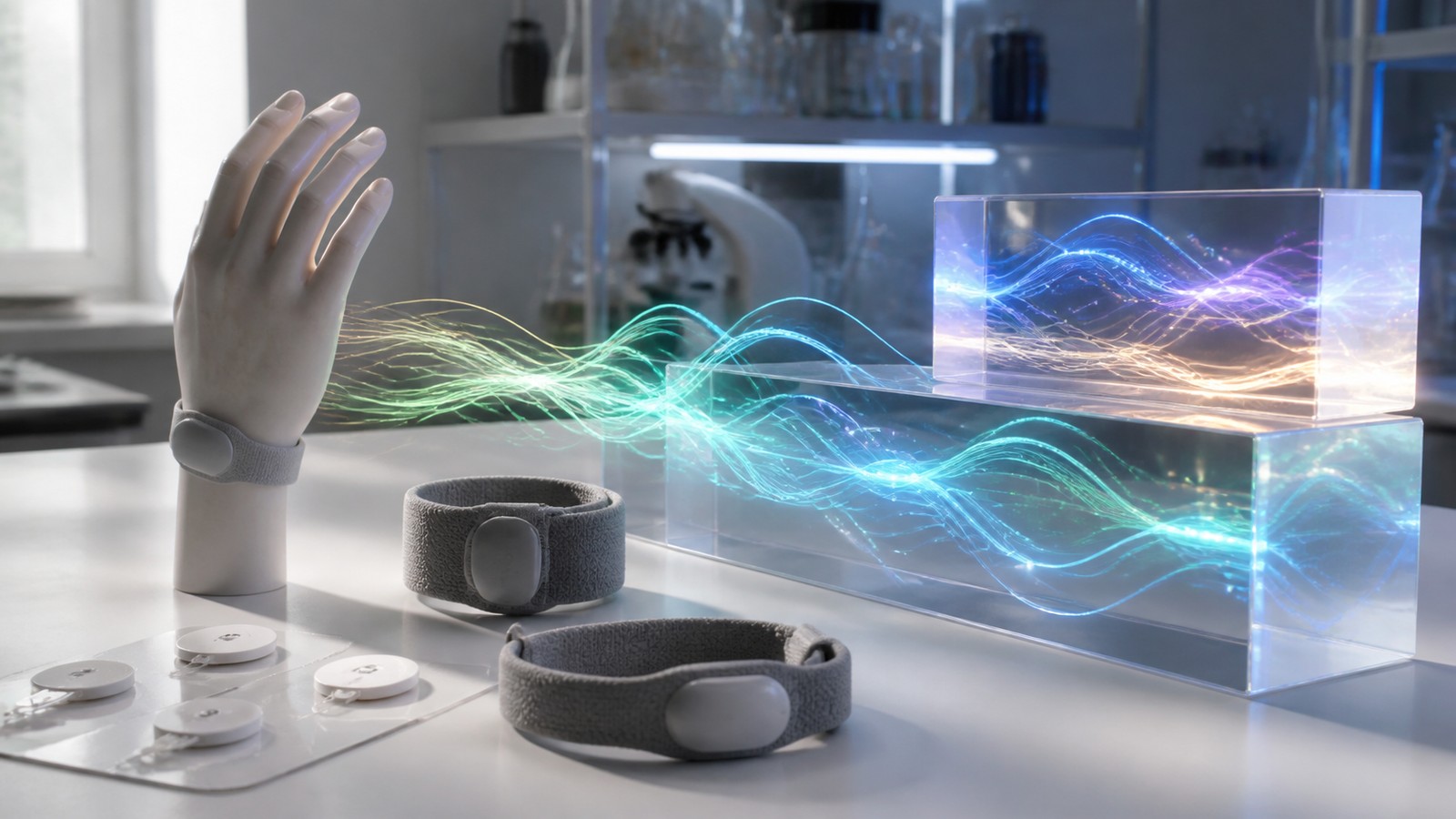
Wearable devices make bio-signal collection easier, but convenience brings tradeoffs. A watch, patch, headset, or armband may be easier to use than lab equipment while also facing more motion, placement variation, and daily-life noise.
AI can help clean and interpret wearable signals, but validation should match the real environment. A model that works during a quiet test may not perform the same during work, exercise, sleep, or travel.
Privacy Requires Discipline
Bio-signals can reveal sensitive information about health, stress, sleep, movement, and behavior. Even when the signal is collected for a narrow purpose, it may imply more than users expect.
Responsible systems limit collection, protect storage, explain use, and restrict access. Privacy is not only a legal concern; it is part of earning trust when body data is involved.
Clinical Use Needs Oversight
When bio-signal AI supports health decisions, oversight becomes essential. A model may flag events, summarize patterns, or support triage, but medical interpretation should remain tied to qualified review and clear evidence.
Clinical workflows also need audit trails. Users should know which signal segment, device, model version, and confidence level supported a result so the output can be checked and improved.
Research Use Needs Reproducibility
Research systems need enough detail for others to understand how results were produced. Electrode layout, sampling rate, filtering, participant conditions, labels, and analysis choices all affect the output.
Reproducibility keeps bio-signal AI honest. If another team cannot repeat the process or inspect the assumptions, the result may be interesting but not dependable enough for broader claims.
Device Control Needs Stability
Bio-signals can control prosthetics, assistive devices, games, or interfaces, but control systems need stable interpretation. A false activation may be frustrating or unsafe depending on the device.
AI control loops should include confidence thresholds, calibration, fallback states, and user override. The goal is responsive control without turning every uncertain signal into action.
Monitoring Needs Baselines
Personal baselines help bio-signal systems understand what is normal for one person or one setting. Heart rhythm, muscle effort, and EEG patterns can vary widely across individuals.
A baseline does not replace broader validation, but it helps reduce unnecessary alerts and improves interpretation. The model can compare a current pattern with both population examples and the user's own history.
Bias Can Enter the Dataset
Bio-signal datasets may underrepresent certain ages, bodies, skin types, health conditions, movement patterns, or device placements. If the dataset is narrow, the model may perform unevenly across users.
Teams should review who is represented in the data and where performance changes. Fairness in bio-signal AI includes measurement quality, labeling quality, and access to reliable devices.
Alerts Should Be Understandable
A useful alert should explain what changed, how strong the evidence is, and what action follows. A vague warning can create anxiety or confusion, especially when the signal involves health or body function.
Plain-language outputs help users respond appropriately. The system should avoid overstating certainty while still giving enough detail for a clinician, technician, researcher, or user to take the next step.
What to Check Next
Before trusting a bio-signal system, teams should check signal quality, label quality, model validation, device conditions, and the workflow where results will be used. Each layer can change the meaning of the final output.
They should also compare model results with expert review and real outcomes. A strong score on stored data is useful, but real-world performance decides whether the system helps.
Deployment Notes
Deployment should include calibration, user instructions, data protection, update control, and clear support paths. Bio-signal systems often fail because the surrounding process is weaker than the model.
Teams should monitor drift after launch. Sensor wear, user behavior, software updates, and changing environments can all change the signal the model sees.
Final Takeaway
EEG, ECG, and EMG give AI valuable windows into brain, heart, and muscle activity, but those windows are imperfect. Careful collection, labeling, validation, privacy, and oversight turn the signals into useful evidence.
The best bio-signal systems are practical and humble. They make patterns easier to see while keeping human judgment, clinical review, and measurement limits clearly in view.
Artifact Review Protects Accuracy
Artifacts are non-biological patterns that enter the recording. In EEG they may come from blinking, jaw tension, or cable movement. In ECG they may come from loose leads, motion, or electrical interference. In EMG they may come from nearby muscles or poor electrode contact.
AI systems should not simply hide artifacts; they should help teams recognize them. A clear artifact review process makes the final interpretation more trustworthy because users can see whether the model analyzed the body signal or the noise around it.
Sampling Choices Affect Detail
Sampling rate, channel count, and recording duration all affect what an AI model can learn from EEG, ECG, and EMG. If the signal is sampled too slowly or recorded for too little time, important events may never appear in the data.
More detail also creates cost. Larger files, higher battery use, and more complex processing may make a system harder to deploy. The best setup captures enough detail for the decision without collecting more than the workflow can manage.
Windowing Changes the Evidence
Bio-signal models often analyze short time windows rather than an entire recording at once. The window length can change the result because some patterns happen quickly while others need longer context.
A short EMG window may capture a muscle burst, while a longer ECG or EEG window may be needed to understand rhythm or state changes. Teams should choose windows that match the body process being studied.
Multi-Signal Review Adds Confidence
EEG, ECG, and EMG can sometimes support each other when the use case needs broader context. Movement, heart response, and brain-state patterns may tell a stronger story together than any one signal alone.
The signals should not be blended carelessly. Each one has different timing, noise, and meaning. A careful fusion approach asks whether the signals agree, conflict, or simply describe separate parts of the same event.
User Experience Shapes Data Quality
The person wearing or using a bio-signal device affects the quality of the recording. Comfort, instructions, skin preparation, device fit, and session length can all change whether the signal remains usable.
A system that is technically accurate but uncomfortable may produce poor real-world data because users adjust it, remove it, or stop using it. Good design treats user experience as part of measurement quality.
Reports Should Preserve Evidence
A bio-signal report should include enough evidence for review. That may mean waveform segments, event timing, confidence levels, sensor status, and notes about data quality.
This evidence helps clinicians, researchers, technicians, or users understand why the system produced an output. It also supports quality improvement when the model is wrong or uncertain.
Long-Term Use Needs Maintenance
Long-term bio-signal systems need maintenance beyond software updates. Electrodes, wearables, cables, adhesives, batteries, and sensor surfaces can all degrade or change over time.
Maintenance protects both accuracy and trust. If a user sees inconsistent results because hardware was neglected, they may blame the entire AI system even when the model is not the root problem.
How Teams Compare Signal Types
Teams should compare EEG, ECG, and EMG by the question they answer, not by which signal sounds more advanced. EEG is useful for brain activity patterns, ECG is useful for heart rhythm, and EMG is useful for muscle activation.
That separation keeps expectations realistic. A model can combine signals when the workflow needs it, but each signal should still be judged by the physical process it actually measures.
Why Plain Explanations Matter
Bio-signal outputs should be explained in language that matches the user. A researcher may want features and confidence intervals, while a patient, athlete, or device user may need a simple description of what changed and why it matters.
Plain explanations reduce misuse. They help people understand when a result is strong, when it is uncertain, and when professional review or another measurement is needed. Clear wording also makes later support easier.