AI Turns Bio-Signals Into Practical Insight
AI turns bio-signals into insight by finding patterns in body data that would be difficult to review manually at scale. Electrical, motion, heart, muscle, skin, and breathing signals can support health monitoring, rehabilitation, sports analysis, workplace safety, assistive technology, and behavior research. The value is not simply collecting more body data. The value is connecting the right signal to a clear question, checking quality, and presenting results in a way people can review and use.
Body Data Needs Purpose
Bio-signal projects should begin with a clear question. The system may need to detect a rhythm change, measure exertion, track recovery, estimate sleep quality, support a prosthetic, or study movement.
When the purpose is vague, AI can turn into a pattern hunt. A clear question helps teams choose sensors, labels, metrics, privacy rules, and output formats that fit the decision.
Sensors Capture Different Clues
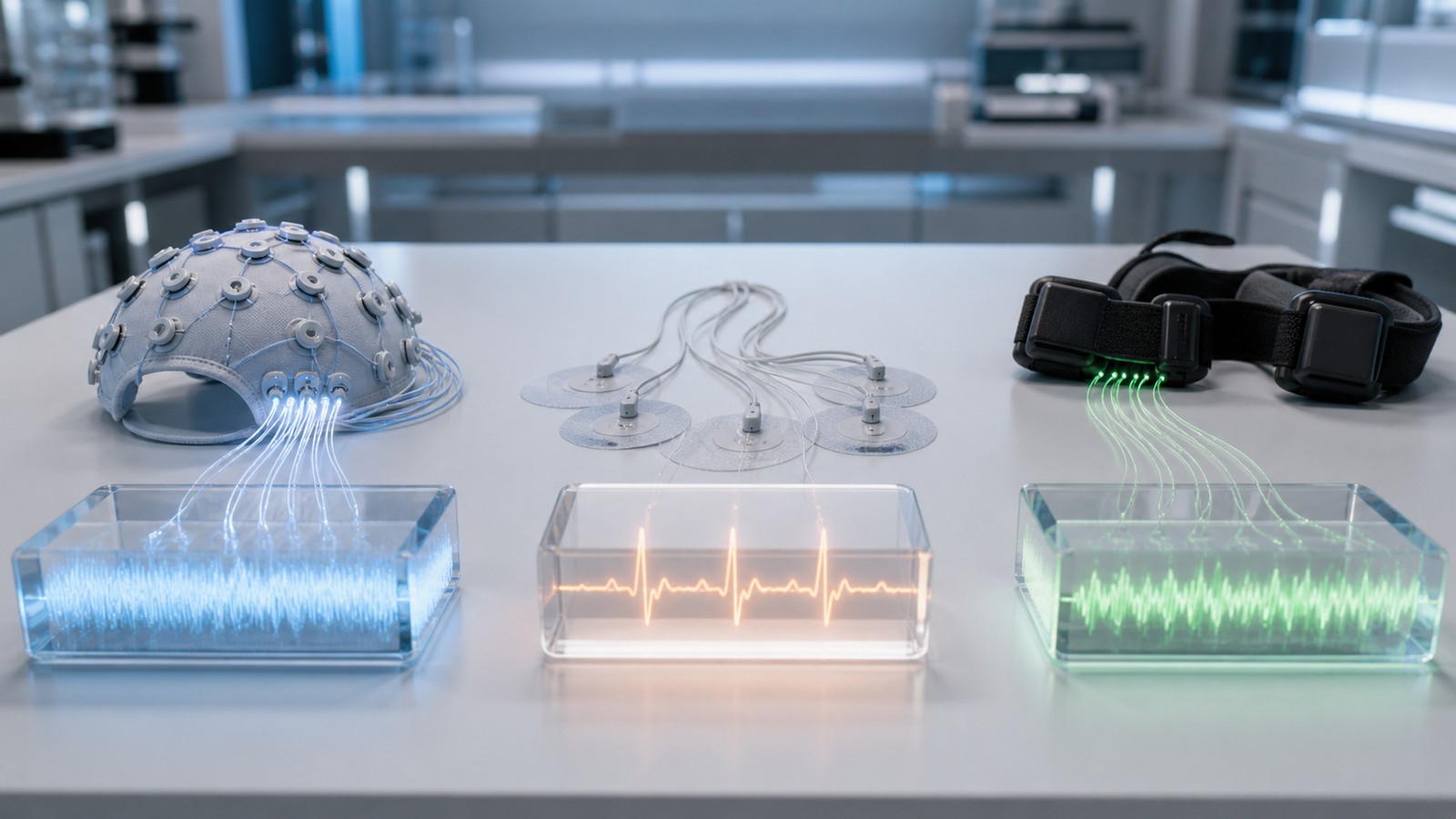
Different sensors reveal different parts of the body. ECG shows heart timing, EMG shows muscle activation, EEG shows brain activity, accelerometers show movement, and skin sensors may reflect temperature or conductance.
AI can compare these clues, but it should respect what each signal can and cannot prove. A sensor provides evidence from one angle, not a complete explanation of health, intent, or behavior.
Preprocessing Shapes the Result
Raw bio-signals usually need cleaning before AI can use them. Filtering, segmentation, artifact removal, normalization, and quality checks can all change what the model learns.
These steps should be documented and tested. If preprocessing removes useful detail or keeps bad noise, the model may produce outputs that look stable but miss the real pattern.
Patterns Need Context
A body signal means more when it is connected to activity, posture, sleep, stress, medication, illness, environment, or user goal. A high heart rate during exercise is different from a high heart rate during rest.
AI systems should include context when it is available and avoid overinterpreting isolated readings. Context turns a number into a more useful clue.
Health Insights Need Caution
Bio-signal AI can support health insight, but it should not overstate what the data proves. Signals may point toward a pattern that deserves review without being enough for a diagnosis.
Clear language matters. Users should know whether the system is providing a wellness trend, a device alert, a research result, or information that should be reviewed by a professional.
Motion Signals Add Behavior Clues
Wearable motion signals can show walking, tremor, posture, exercise, recovery, and daily activity. AI can summarize these patterns over time and detect changes that a person might not notice immediately.
Motion data can also be ambiguous. A sudden movement may be exercise, a fall, device removal, or ordinary handling. The model should use timing and supporting signals before making strong claims.
Muscle Signals Support Control
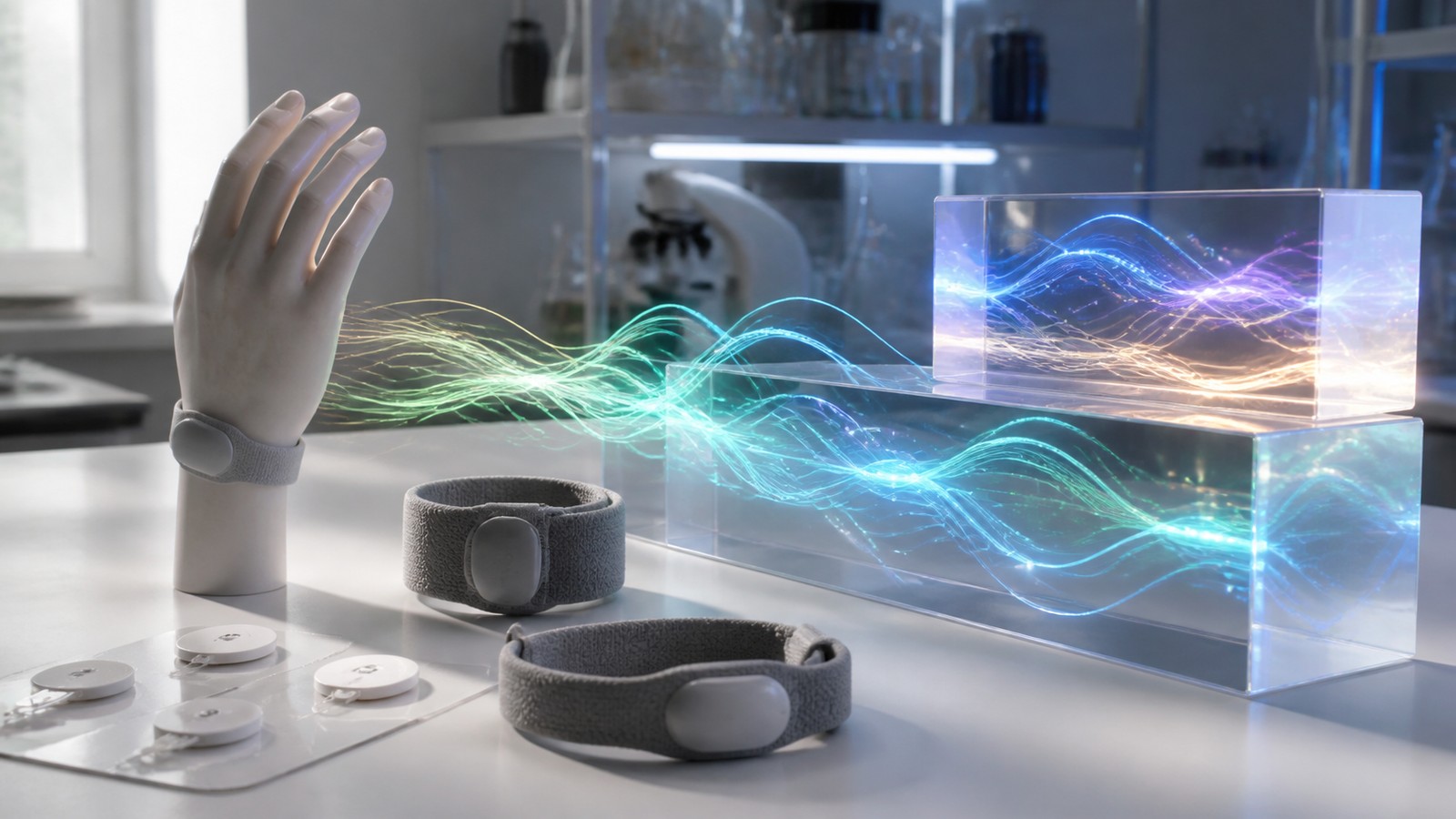
EMG can help AI understand muscle intent for prosthetics, rehabilitation tools, ergonomic studies, and assistive devices. The model learns which activation patterns correspond to movements or effort levels.
Control systems need reliability and comfort. A user should not have to fight the model, recalibrate constantly, or accept unsafe actions when the signal becomes uncertain.
Heart Signals Support Monitoring
Heart-related signals can reveal rhythm, rate, recovery, exertion, and stress response. AI can detect unusual patterns across long recordings that would be difficult for a person to scan manually.
Monitoring should include false alarm management. Too many alerts can lead users to ignore the system, while missed events can reduce trust and safety.
Brain Signals Support Research
EEG and related signals can support research into sleep, attention, seizure activity, workload, and brain-computer interaction. AI helps organize complex time-series patterns into more reviewable outputs.
Brain signals are especially easy to overstate. A scalp signal can support a hypothesis, but it should be interpreted with experimental design, expert review, and awareness of artifacts.
Behavior Insights Need Ethics
Bio-signals can be used to infer behavior, fatigue, stress, attention, or emotion, so ethical boundaries matter. People should not be reduced to a hidden score they cannot understand or challenge.
Responsible use includes consent, purpose limits, privacy controls, and careful communication. The more personal the inference, the more cautious the system should be.
Personal Baselines Improve Meaning
People differ. A useful bio-signal system may need to learn an individual's normal range before judging change. Personal baselines can reduce false alarms and make trends more meaningful.
Baselines should be updated carefully. If a person's health, medication, training, or routine changes, the system may need review before old assumptions are carried forward.
Model Confidence Should Be Visible
Confidence helps users know how much weight to give an output. A strong pattern from clean data is different from a weak pattern during motion, poor contact, or missing channels.
The system should expose uncertainty in plain language. This makes the result easier to review and helps prevent users from treating every output as equally reliable.
Feedback Improves the System
AI improves when users, clinicians, researchers, or operators can confirm whether outputs were useful. Feedback helps distinguish true events, false alarms, and unclear cases.
The feedback process should be simple enough to use. If correcting the model is burdensome, the system may keep repeating mistakes that people noticed early.
Integration Changes the Workflow
Bio-signal insight becomes more useful when it fits the workflow. A rehabilitation tool, wearable app, clinic dashboard, or safety platform each needs different timing, language, and escalation paths.
Integration should reduce burden rather than create extra review work. The model should summarize, prioritize, and explain signals in a form the user can act on.
Data Protection Builds Trust
Body data is sensitive because it can reveal health, habits, location, stress, and activity. AI systems need strong protection around collection, storage, access, retention, and sharing.
Trust also depends on explaining why the signal is collected. Users should understand the purpose and limits of the system before they are asked to rely on it.
What to Check Next
Teams should check whether the signal, model, and output match the decision. A body signal may be interesting, but it is useful only when it supports a clear action or review.
They should also test across real conditions. Movement, daily use, device placement, and user differences can reveal weaknesses that do not appear in a clean dataset.
Deployment Notes
Deployment should include instructions, calibration support, alert tuning, privacy review, and a way to handle uncertain results. Bio-signal AI needs a complete operating process.
Teams should track whether outputs lead to better decisions. If users ignore alerts, misunderstand scores, or cannot act on the result, the system needs redesign.
Final Takeaway
AI can turn bio-signals into health, motion, and behavior insight when the signals are measured well and interpreted carefully. The model should make body data clearer, not more mysterious.
The strongest systems stay grounded in purpose, context, privacy, and review. They help people see patterns while respecting the limits of the evidence.
From Signal to Insight Takes Several Steps
A useful bio-signal insight usually passes through several stages: capture, cleaning, feature extraction, model interpretation, confidence scoring, and user-facing explanation. Each stage can improve or weaken the final result.
Teams should inspect the full chain when results look strange. A weak output may come from the sensor, a label, a time window, a threshold, or the way the result is displayed rather than the core model alone.
Daily-Life Data Is Harder Than Lab Data
Real-world bio-signals are harder to interpret than lab recordings. People move unpredictably, wear devices differently, sleep in different positions, exercise at different intensities, and encounter changing environments.
That variability is not a reason to avoid AI; it is a reason to test honestly. A model intended for daily use should be evaluated under daily-use conditions, not only during controlled sessions.
Trends Can Be More Useful Than Moments
A single bio-signal reading can be useful, but trends often provide stronger insight. Recovery, sleep quality, fatigue, heart-rate variability, movement smoothness, and rehabilitation progress may matter more over days or weeks than in one instant.
AI can summarize those trends so users are not forced to inspect every reading. The summary should still allow review of the underlying evidence when a result is surprising.
Actionability Separates Insight From Noise
Bio-signal outputs should lead to a practical next step. That step may be rest, review, calibration, medical follow-up, training adjustment, device tuning, or simply watching a trend.
If users cannot tell what to do with an output, the system may create anxiety or clutter instead of value. Actionable language makes the signal useful without overstating certainty.
Model Updates Need Care
Updating a bio-signal model can change alerts, scores, trends, and user expectations. Even a technically better model may confuse users if old and new results are not explained clearly.
Version control helps teams compare performance and investigate changes. Users should not lose trust because a score shifted without a clear reason or because past results no longer line up with the new model.
Group Insights Need Extra Caution
Organizations may want to use bio-signal data to understand teams, patients, athletes, workers, or study participants. Group-level summaries can be useful, but they can also hide individual differences and privacy concerns.
Responsible systems limit access, avoid unnecessary identification, and explain how aggregate results are built. People should not be judged by hidden body-data inferences they cannot inspect.
Good Design Reduces Overload
Bio-signal systems can generate too much information. Continuous data, frequent alerts, and detailed charts may overwhelm the people who need to act on the results.
Good design filters and prioritizes. It shows important changes, keeps routine data available but quiet, and helps users understand when a signal deserves attention quickly.
Why Examples Improve Trust
Examples help users understand bio-signal outputs. A dashboard can show a typical reading, a changed reading, and the reason the model treated the change as important. This makes the system feel reviewable instead of mysterious.
Examples also help during training and support. Clinicians, coaches, researchers, technicians, or everyday users can learn what the system means by a trend, alert, or confidence level.
How Bio-Signal AI Handles Edge Cases
Edge cases are common in body data. A device may be worn loosely, a user may have an unusual rhythm, a movement may not match the training set, or a signal may be affected by sweat, posture, or medication.
The model should have a safe response to unfamiliar patterns. It can lower confidence, ask for another reading, recommend review, or avoid making a strong claim when the signal does not fit known examples.
Why Outcomes Matter More Than Scores
A model score is useful, but the real test is whether the system improves decisions. Better recovery tracking, clearer alerts, faster review, fewer false alarms, or safer device control matters more than a high number on a private dataset.
Teams should connect outputs to outcomes after launch. If the AI does not change decisions in a useful way, the signal pipeline may need a better goal, not only a better model.
Final Review for Responsible Use
Responsible use means the system respects consent, context, and consequences. Bio-signal AI should not turn personal body data into hidden judgments that users cannot understand or question.
A final review should ask whether the benefit is clear, whether the data is protected, whether the output is actionable, and whether uncertain cases are handled carefully. That review should happen again after launch, once real users show where the system helps and where it creates friction.