Emotion AI Studies Signals, Not Inner Truth
Emotion AI is changing how organizations think about behavior, but it works best when its limits are clear. These systems look for signals in facial movement, voice tone, word choice, posture, timing, and device behavior. They can help notice patterns of frustration, attention, stress, or engagement, yet they do not truly read minds. Human behavior is shaped by culture, context, habit, privacy, and situation, so emotion AI should be treated as a cautious interpretation tool rather than proof of what someone feels.
What Emotion AI Actually Measures
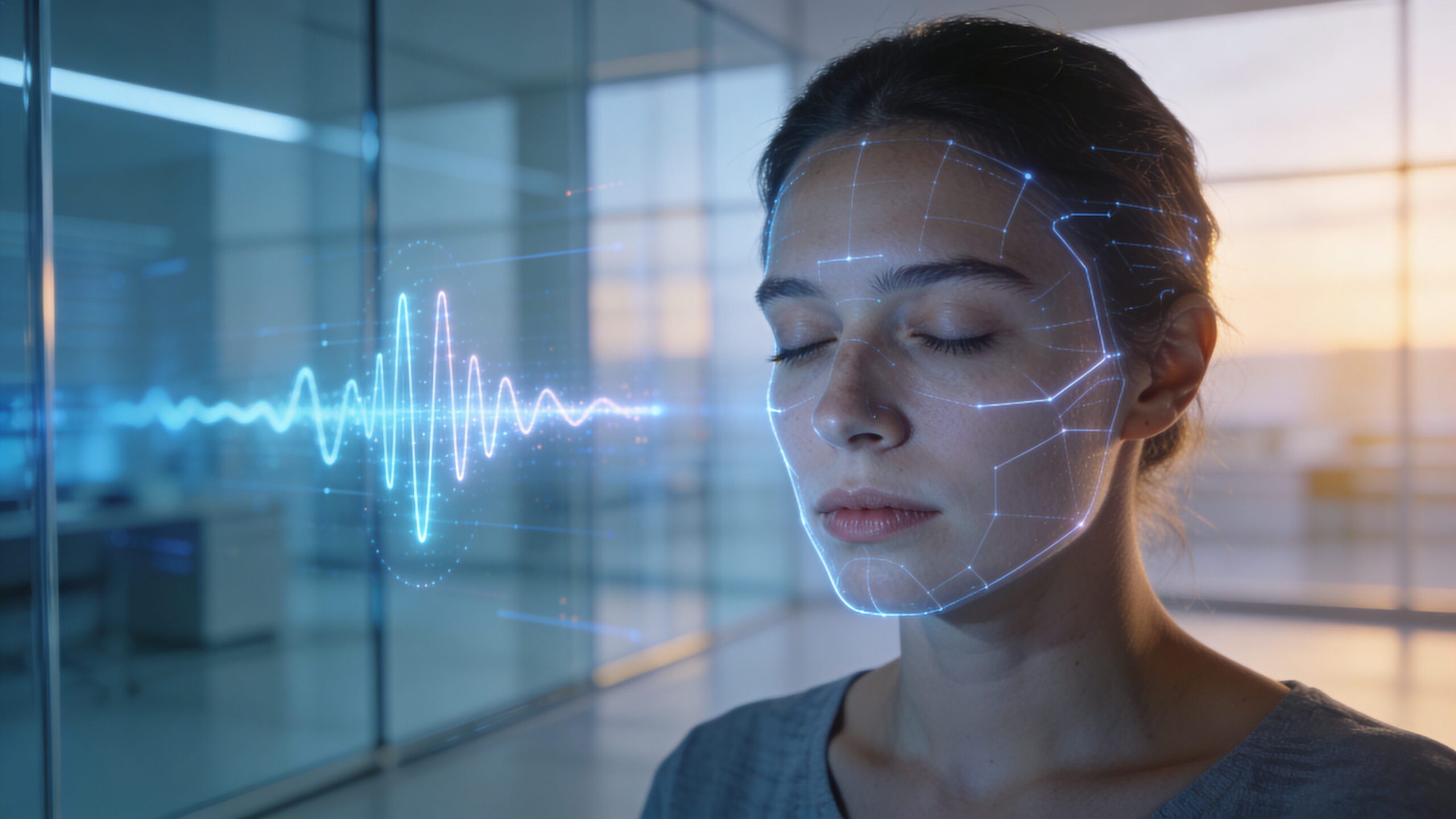
Emotion AI usually begins with visible or measurable behavior. A camera may detect facial landmarks, a microphone may capture pace and pitch, and text software may study phrasing or sentiment. Some systems also use gaze, movement, keystroke rhythm, wearable data, or interaction timing. These inputs can describe outward signals, but they cannot directly access a person’s private inner state.
That distinction matters because the same signal can mean different things. A quiet voice may show sadness, fatigue, concentration, illness, or simple personality. A neutral face may hide frustration or reflect calm focus. The technology can estimate a pattern, but the estimate depends on training data, context, and the assumptions built into the model.
A useful system therefore speaks carefully. It may say a user appears disengaged, a caller sounds tense, or a driver shows signs of fatigue. It should not claim certainty about motive, honesty, character, or emotional truth. The more serious the decision, the more important that caution becomes.
This framing also protects users from overreaction. If the system is treated as a signal reader, a manager, teacher, clinician, or designer can use it as one clue among several. If it is treated as emotional truth, the same output can become unfair, invasive, or simply wrong.
Where the Technology Is Used
Emotion AI appears in customer service, driver monitoring, online learning, mental wellness tools, market research, games, safety systems, and workplace analytics. In each setting, the promise is similar: notice human signals earlier and adjust the experience. A call center might flag a frustrated customer. A vehicle might detect drowsiness. A learning platform might notice when students appear confused.
These uses can be helpful when the system supports care and attention. A driver-fatigue alert, for example, can serve a clear safety purpose. A learning tool that helps a teacher find confusing material may also be useful. The strongest applications connect the signal to a limited, practical response rather than a sweeping judgment about the person.
The risk grows when emotion AI is used to score workers, judge students, evaluate honesty, or make high-stakes decisions without meaningful review. In those cases, a weak estimate can become an unfair label. The technology needs boundaries that match the seriousness of the outcome.
The most useful deployments define the response before collecting the signal. If a customer sounds upset, will the system route the call, offer support, or merely record a score? If a student appears confused, will the teacher receive a gentle prompt or will the student be labeled? Purpose shapes whether the tool helps.
Context Changes Every Reading
Human behavior does not happen in a vacuum. A person may look away because they are distracted, but they may also be thinking, reading, listening, or avoiding eye strain. Someone may speak quickly because they are anxious, excited, rushed, or simply from a place where faster speech is normal. Context often explains the signal.
Good systems try to include surrounding information without collecting more data than necessary. Time of day, task type, recent interaction history, and environmental conditions can sometimes make an interpretation more reasonable. Even then, context should soften the claim rather than make it absolute.
This is why human review remains important. People can ask questions, compare evidence, and recognize special circumstances that a model may miss. Emotion AI is strongest when it prompts a closer look, not when it becomes the final authority on a person’s state.
Context also includes the relationship between the person and the organization using the system. A voluntary wellness app, a vehicle safety alert, and a workplace monitoring program do not carry the same power dynamics. The same technical feature can feel supportive in one setting and coercive in another.
Bias Is a Real Concern
Emotion models can inherit bias from the data used to train them. If the examples are narrow, the system may perform worse for people with different cultures, ages, disabilities, accents, skin tones, facial structures, or communication styles. A model trained on staged expressions may also struggle with ordinary, subtle behavior.
Bias testing needs to happen before deployment and continue afterward. It should examine different groups, lighting conditions, languages, devices, settings, and real-world scenarios. A tool that performs well in a lab may still fail in a classroom, office, vehicle, clinic, or public space.
The safest approach is to limit claims, measure errors, and give people ways to challenge results. When the technology affects access, discipline, opportunity, or care, a flawed interpretation can cause harm that lasts beyond the moment of analysis.
Bias review should include the people affected by the system when possible. Technical teams may notice statistical gaps, but users can often explain why a reading feels unfair or why a behavior has been misunderstood. That feedback can reveal weaknesses that numbers alone miss.
Privacy Shapes Trust
Emotion AI can feel especially personal because it may analyze a face, voice, or behavioral pattern that people did not expect to be scored. Even when the data is not used for identity, it can still reveal sensitive information about attention, stress, mood, health, or vulnerability.
Responsible use begins with purpose. The system should collect only what is needed, explain what is being measured, limit retention, protect access, and avoid hidden secondary uses. Consent should be specific enough that people understand the difference between ordinary service data and behavioral interpretation.
Trust also depends on the ability to opt out or receive a non-AI alternative when possible. If people feel watched rather than helped, the system may damage the relationship it was supposed to improve. Privacy is not separate from performance; it shapes whether the tool can be accepted at all.
Privacy rules also need to cover derived data. Even if raw video or audio is deleted, the system may keep scores, labels, trends, or profiles. Those outputs can be sensitive too, especially if they follow a person across time or affect later decisions.
Better Design Uses Uncertainty
Emotion AI outputs should make uncertainty visible. Instead of a single bold label, a system can show confidence, recent changes, comparison points, and possible explanations. This helps users treat the result as evidence to consider, not a fact to obey.
Design also affects behavior. If a dashboard labels someone as angry, lazy, dishonest, or unmotivated, it can bias the human reviewer. If the system instead says that speech pace, volume, or interaction timing changed, the reviewer has more room to interpret fairly.
The best interfaces guide attention without overclaiming. They show what was measured, why it may matter, and what action is reasonable. That makes the tool more useful and less likely to turn uncertain signals into unfair conclusions.
Uncertainty can also be shown through restrained action. A low-confidence result might simply invite observation, while a stronger pattern across multiple signals might trigger a review. This makes the system less brittle and reduces the chance that one odd moment becomes a formal judgment.
Human Behavior Is Bigger Than the Model
People do not express emotion in one universal way. Some people smile when uncomfortable, stay calm under stress, or show little visible reaction while feeling deeply. Others use expressive gestures, indirect language, or cultural norms that a model may not understand. Any system that reduces this variety too aggressively will miss important meaning.
This does not make the field pointless. It means emotion AI should be applied where visible signals are genuinely useful and where mistakes can be corrected. A fatigue prompt, a customer support cue, or a training feedback signal can be helpful if the result remains limited and reviewable.
The more the technology claims to know about personality, honesty, suitability, or intent, the more skepticism it deserves. Human behavior can inform a model, but a model should not flatten a person into a score.
A healthy design leaves space for self-report and correction. People often know more about their state than a camera or microphone does. When a tool allows users to explain, override, or contextualize a result, it becomes more respectful and often more accurate.
The Practical Takeaway
Emotion AI is most useful as a careful signal layer. It can point toward possible stress, attention changes, frustration, or fatigue, especially when combined with clear context and human judgment. It becomes risky when estimates are treated as emotional truth.
A good review asks what signals were measured, how the model was tested, what groups were included, how uncertainty is shown, and what happens when the system is wrong. Those questions keep the conversation grounded in evidence rather than hype.
As the technology spreads in 2026, the healthiest deployments will be narrow, transparent, and easy to challenge. Emotion AI can support better experiences, but only when it respects the complexity of the people it tries to interpret.
The practical standard is usefulness with humility. Emotion AI can improve safety, service, and accessibility when the task is narrow and the response is humane. It becomes dangerous when it promises certainty about feelings that even people may struggle to name.
How to Read the Claim
A practical evaluation starts with the claim. If a vendor says the system detects stress, ask what signal supports that claim. If it says the system improves service, ask how that improvement was measured. If it says the system understands emotion, treat the claim with more skepticism because understanding is much broader than detection.
The next question is the setting. A model tested on clear video in a controlled room may behave differently in a car, classroom, call center, clinic, or phone app. Background noise, camera angle, lighting, language, and user expectations can all change the result.
A responsible review also asks who is affected by mistakes. A false fatigue alert may be annoying but manageable. A false workplace emotion score may affect reputation or opportunity. The same technical error can carry different consequences in different settings.
Finally, the review should look for a correction path. People need a way to challenge, explain, or override sensitive interpretations. That path helps prevent uncertain signals from hardening into permanent records or unfair judgments.
Emotion AI will keep improving, but improvement does not remove the need for restraint. The technology can support attention and care when it is transparent, narrow, and accountable. It becomes weaker when it overstates what behavior can prove.
Final Takeaway
The clearest standard is modesty. Emotion AI can help people notice possible states, but it should leave room for context, consent, and correction. When the tool stays modest, it can support better service and safety without pretending to know more than the evidence allows.
That balance will define the next stage of adoption. Systems that respect uncertainty will be easier to trust, while systems that claim too much will face stronger resistance from users, regulators, and the people being analyzed.
In practical terms, the strongest use cases will be the ones where an estimate leads to support rather than punishment. That keeps the technology focused on helping people instead of judging them.