Filters Help Separate Useful Signal From Noise
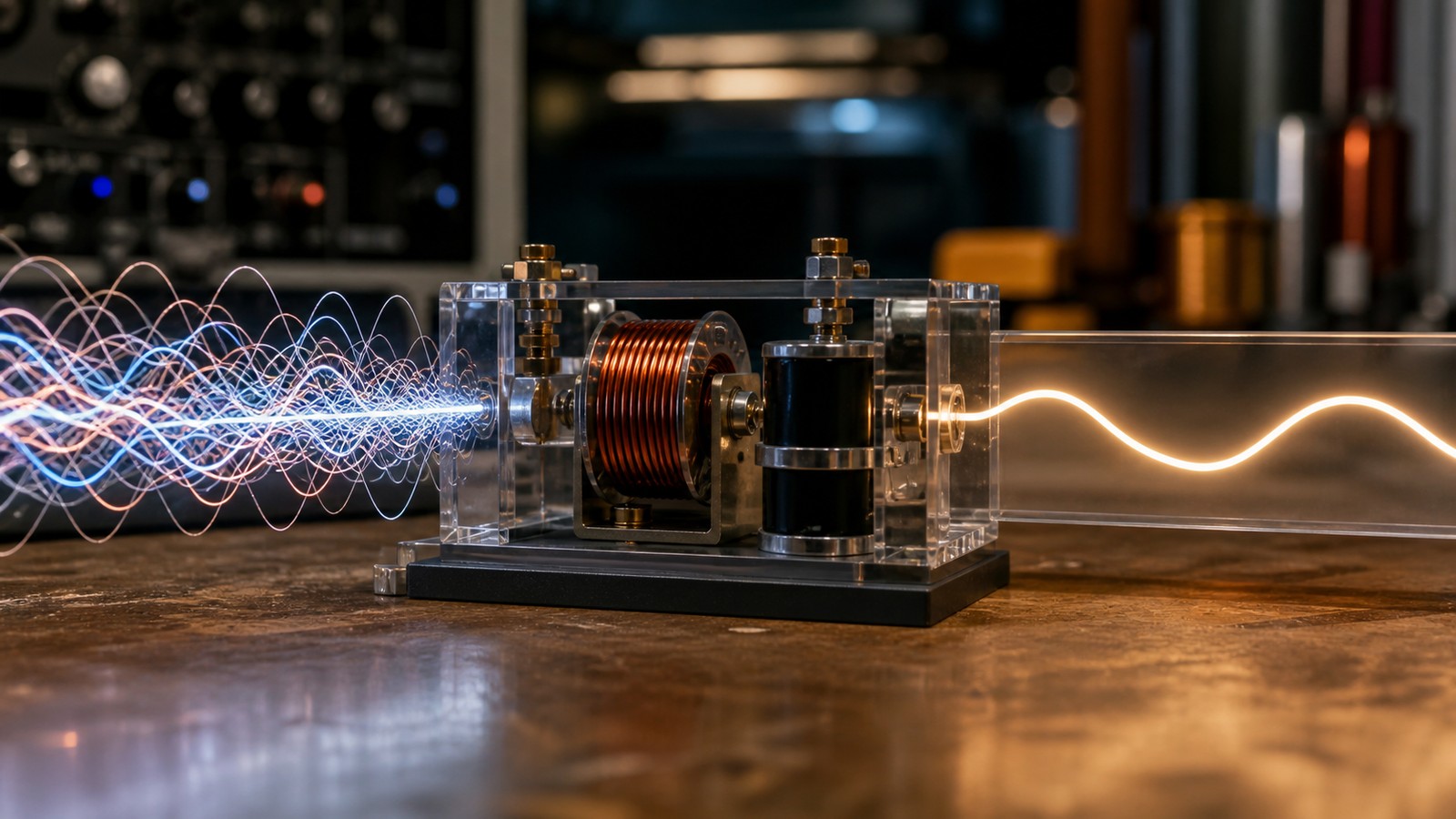
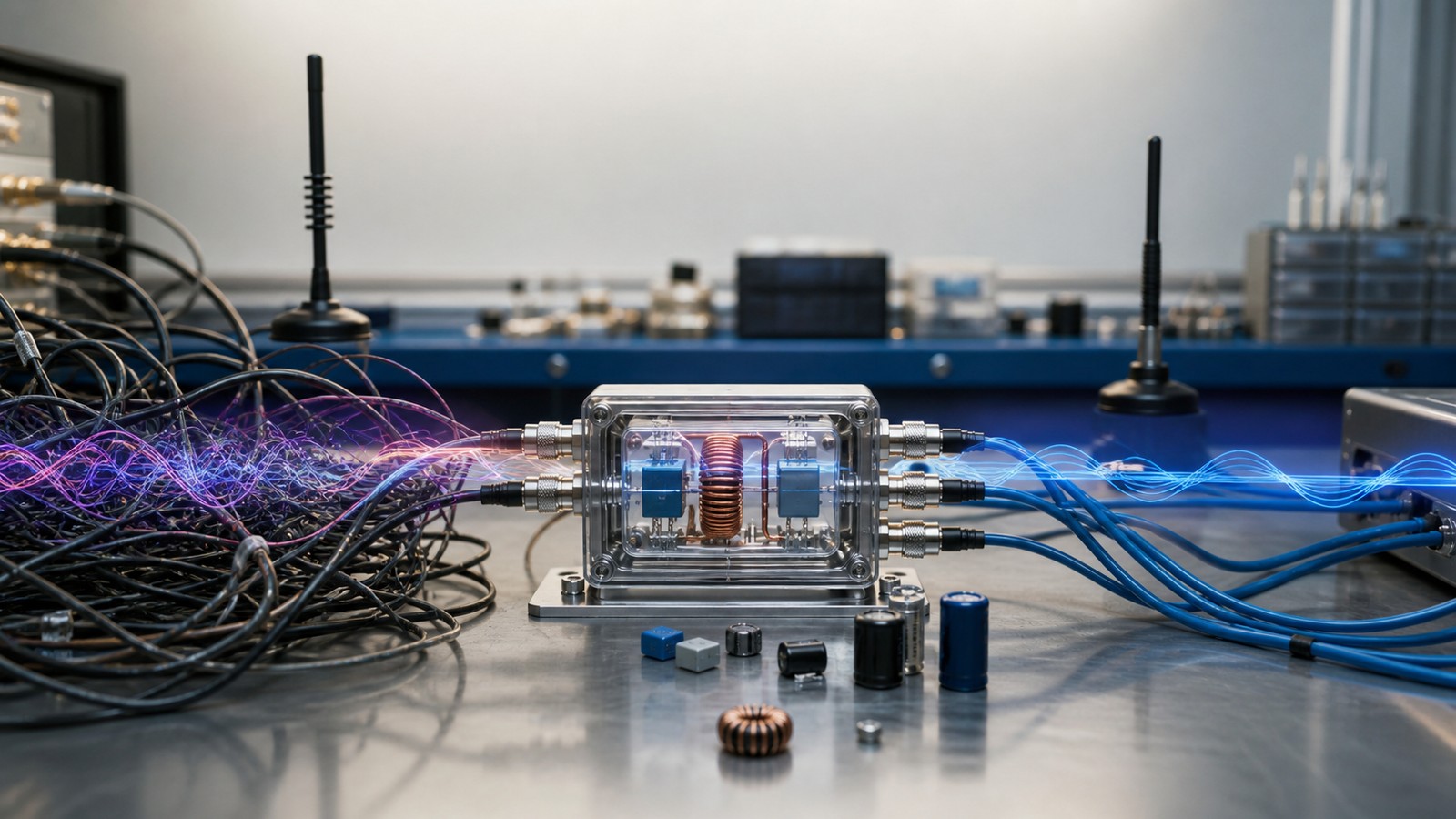
Filters remove noise from electrical and wireless signals by changing which parts of a signal are kept, reduced, or rejected. A filter may target unwanted frequencies, smooth rapid variation, remove a narrow interference tone, or limit a signal to the band a system needs. Filters are powerful because they make signals easier to measure, transmit, analyze, and control. They also require care, because a filter can remove useful information if it is designed for the wrong problem.
Filtering Starts With a Goal
A filter should begin with a clear goal. The team may need to reduce hiss, remove interference, smooth jitter, protect a receiver, or isolate a channel.
Without a goal, filtering can become guesswork. The filter should solve a signal problem, not only make a waveform look cleaner.
Low-Pass Filters Smooth Fast Noise
A low-pass filter keeps slower changes and reduces faster ones. It is useful when high-frequency noise hides a slower signal.
This can help sensors, audio, and control systems. It can also hide sharp events if used too aggressively.
High-Pass Filters Remove Slow Drift
A high-pass filter keeps faster changes and reduces slow movement or baseline drift.
This is useful when the important signal is a pulse, vibration, edge, or changing detail riding on a slow background.
Band-Pass Filters Keep a Range
A band-pass filter keeps a chosen range of frequencies and reduces frequencies above and below it.
Wireless receivers, audio tools, and biomedical systems often use band-pass filtering when the useful signal lives in a known band.
Notch Filters Remove Narrow Interference
A notch filter targets a narrow frequency, such as hum or a specific interfering tone.
Notch filters are useful when the unwanted frequency is known and narrow. They should be placed carefully so useful nearby content is not damaged.
Analog Filters Work Before Sampling
Analog filters operate on the physical signal before it is digitized. They can protect inputs and reduce aliasing.
This matters because some problems cannot be fully fixed after poor sampling. Pre-sampling filtering can be essential.
Digital Filters Work on Samples
Digital filters process sampled data. They can be flexible, repeatable, and easy to update in software.
They still depend on sample rate and signal quality. Digital filtering cannot recover detail that was never captured.
Cutoff Frequency Matters
The cutoff frequency defines where a filter begins changing the signal strongly.
Choosing it requires knowing the useful signal and unwanted noise. A bad cutoff can either leave noise or remove important information.
Filter Shape Matters
Filter shape includes roll-off, ripple, phase behavior, and stopband rejection.
Different designs make different tradeoffs. A filter that is excellent for one task may be poor for another.
Phase Delay Can Matter
Some filters delay parts of the signal differently. This can change timing relationships.
Phase behavior matters in control, communications, measurement, and audio. Smoothness is not the only requirement.
Filtering Can Create Artifacts
Filters can introduce ringing, overshoot, delay, or edge effects. These artifacts can be mistaken for real signal behavior.
Engineers should test filters on known examples. This helps reveal side effects before deployment.
Wireless Filtering Protects Channels
Wireless systems use filters to focus on desired channels and reject out-of-band energy.
Good filtering helps receivers avoid interference and meet regulatory limits. It is part of spectrum discipline.
Electrical Filtering Improves Measurement
Electrical systems use filters to reduce noise, smooth readings, and isolate useful components.
Measurement filters should be chosen so they preserve the event or trend being measured. Over-filtering can hide faults.
Adaptive Filters Can Change
Some filters adapt as conditions change. They may track noise, echo, or interference that is not fixed.
Adaptive filtering is powerful, but it needs safeguards. A filter that adapts poorly can damage the useful signal.
Before and After Evidence Is Essential
The filtered signal should be compared with the original. This shows what the filter removed and what it preserved.
Before-and-after review catches over-filtering and helps explain the design to users.
What to Check Next
Teams should check the noise source, useful frequency range, cutoff, filter type, phase effects, and side effects.
They should also test real signals, not only ideal examples. Field noise can behave differently from lab noise.
Deployment Notes
Deployment should document filter settings, sample rate, design type, and reason for use.
If sensors, channels, or noise conditions change, filters may need review. Filtering is part of maintenance.
Practical Review
A practical filter review asks whether the filter improves the decision. Cleaner-looking data is not enough.
The filter should preserve the signal evidence needed for classification, prediction, control, or diagnosis.
Final Takeaway
Filters help separate useful signal from unwanted noise in electrical and wireless systems.
The best filters are chosen for a specific problem, tested on real data, and monitored for side effects.
Filter Design Starts With the Noise
The best filter choice depends on what kind of noise is present. Broadband noise, narrow interference, slow drift, and random spikes need different responses.
Identifying the noise first prevents using the wrong filter. It also makes the result easier to explain.
Filters Need Repeatable Settings
A filter should be documented well enough that another engineer can reproduce the result.
Repeatability matters when filtered data supports reports, model training, alerts, or maintenance decisions.
Filtered Signals Still Need Review
A filter can make a signal look better while hiding an issue. Review should compare filtered output with raw examples and known events.
This prevents the team from trusting smoothness more than evidence. The goal is useful signal, not cosmetic cleanup.
Final Filter Review
A final review asks whether the filter improved measurement, diagnosis, communication, or control.
If the filter does not improve a decision, it may be unnecessary complexity.
Frequency Knowledge Guides Filters
Filter design improves when engineers know which frequency content is useful and which is unwanted.
That knowledge may come from FFT analysis, lab tests, field measurements, or domain experience. The filter should reflect evidence.
Filters Can Protect Models
AI models can become less reliable when noisy inputs dominate useful signal. Filtering can make model inputs cleaner and more stable.
The filter should be tested with the model. A cleaner-looking input is not always a better model input.
Filters Can Protect Hardware
Analog filters can limit unwanted energy before it reaches sensitive circuits or converters.
This protects measurement quality and can reduce aliasing. Some filtering decisions must happen before software sees the signal.
Filters Should Not Hide Faults
A filter that removes the evidence of a fault can make a system look healthier than it is.
This is why before-and-after review matters. Engineers need to know what was removed.
Filter Chains Need Review
Systems may use several filters in sequence. Each filter changes the signal before the next one sees it.
Filter chains should be reviewed as a whole. A harmless filter alone can cause problems when combined with others.
Adaptive Filtering Needs Boundaries
Adaptive filters can track changing noise, but they need boundaries so they do not remove useful signal.
The system should monitor whether adaptation is improving results or chasing the signal it should preserve.
Filter Design Affects Latency
Filtering can add delay, especially when the method uses many samples or complex calculations.
Latency should be considered for real-time systems. A filtered value may be cleaner but later.
Filter Validation Needs Known Signals
Known test signals help validate whether a filter behaves as expected. They can show cutoff, delay, ripple, and side effects.
Validation reduces guesswork. It makes the filter easier to trust in deployment.
Filtered Data Should Be Labeled
Reports and dashboards should show when data is filtered. Raw and filtered values answer different questions.
Labeling prevents confusion. Users should know whether they are seeing measurement or processed output.
Final Filter Takeaway
Filters remove noise best when they are chosen for a specific signal problem and tested against real behavior.
The goal is not perfect smoothness. The goal is better measurement, communication, diagnosis, or control.
Filtering Helps Measurement Confidence
A filter can increase confidence when it removes known unwanted content while preserving the signal of interest.
That confidence should come from testing, not assumption. The team should know why the filtered result is more useful.
Filters Affect Training Data
If AI models are trained on filtered signals, the same filtering should be applied in deployment.
A mismatch between training and live filtering can weaken model performance. Filter settings are part of the model environment.
Noise Sources Can Move
The frequency or behavior of noise can change as equipment, environment, or nearby transmitters change.
A filter that worked last month may not solve the current problem. Review should include fresh signal examples.
Filters Can Work With Shielding
Filtering is not the only answer to noise. Shielding, grounding, placement, cable quality, and channel planning may solve the cause more directly.
Good engineering compares filter fixes with physical fixes. Sometimes the best filter is preventing the noise from entering the signal.
Filter Reports Should Show Purpose
A report should explain why the filter was used, what it reduced, and what signal detail should remain.
Purpose makes the result easier to trust. It also helps future teams decide whether the same filter still belongs in the pipeline.
Filters Need Ownership
Someone should own filter settings in deployed systems. Otherwise, undocumented changes can alter alerts, models, and reports.
Ownership keeps filtering from becoming hidden behavior. It makes review and maintenance possible.
Final Deployment Check
Before launch, teams should test filters against known noise and known useful events.
After launch, they should monitor whether the filter continues to improve decisions without hiding important evidence.
Filter Selection Should Be Evidence-Based
Filter selection should be based on measured signal behavior rather than habit. The team should know whether the unwanted content is fast, slow, narrowband, broadband, random, or periodic.
That evidence points toward low-pass, high-pass, band-pass, notch, adaptive, or physical fixes. Choosing from evidence reduces trial and error.
Filtering Can Improve Communication Links
In wireless systems, filtering helps limit a receiver to the intended channel and reduce energy from nearby signals.
This can improve reliability, but it also requires careful bandwidth choices. A filter that is too narrow can damage the desired signal.
Filtering Can Improve Electrical Safety
In electrical systems, filtering can reduce unwanted components before measurement or control decisions are made.
Safety-related filtering should be tested conservatively. The system should not smooth away signs of real stress.
Good Filtering Supports Better Models
Models trained on well-filtered signals may learn more stable patterns, but only if the filtering preserves the evidence that matters.
That is why filter design and model evaluation belong together. The filter is part of the intelligence pipeline.
Filtering Should Be Rechecked After Changes
New devices, sensors, firmware, cables, environments, or channels can change the noise problem a filter was designed to solve.
A filter that was correct before may become too weak, too strong, or aimed at the wrong frequency range. Periodic review keeps it useful.
Filters Should Support the Real Task
The same raw signal may need different filters for visualization, alerting, control, and model training.
Teams should avoid assuming one filtered version fits every use. Each task may need a different balance of smoothness, delay, and detail.
Final Noise-Removal Takeaway
Filtering is successful when it helps preserve useful information while reducing the part of the signal that gets in the way.
That success depends on evidence, testing, documentation, and a clear reason for every filter in the chain.